At 9:17, the useful question is not “what did New Scientist post?”
At 9:17, between a calendar reminder and an unfinished spreadsheet, a science post can look like one more tab you will never return to. That is the real workplace problem. Not that there is too little information, but that every interesting item asks for a decision: save, ignore, forward, test, or turn into work.
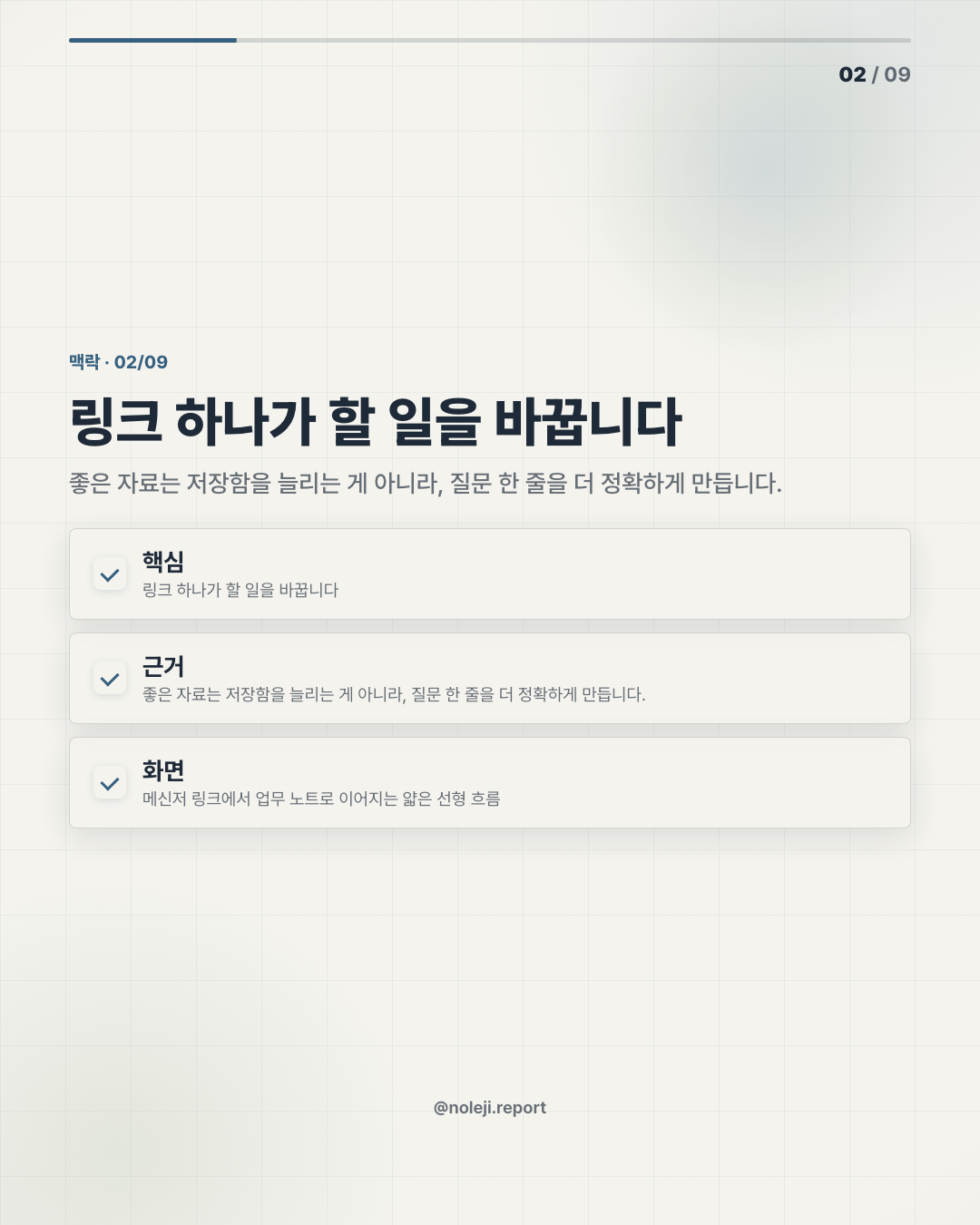
My thesis is simple and arguable: the useful way to read this New Scientist Threads item is not as a claim to believe, but as a workflow prompt. If a science item cannot change what you do next, it should not be allowed to occupy your morning.
“Just stay informed” is too vague to survive a busy week
A lot of professionals treat science and AI updates like weather. Check the feed, feel slightly more aware, move on. I did that for years with technical news, and it made me feel busy without making me better prepared.
The trap is that “staying informed” has no stopping point. It lets every source compete for the same small patch of attention. For a non-developer working inside marketing, operations, education, finance, or management, that is a bad trade. You do not need to become a full-time science watcher. You need a repeatable way to decide which outside facts deserve a slot inside your own work system.
This is where I would be stricter than most readers. A New Scientist post on Threads is not automatically important because the brand is credible. It becomes useful only after you translate it into an operational question: “Would this change how I brief my team, automate a task, evaluate a tool, or explain a trend to someone else?”
The archive-worthy move is to turn one source into one small decision
The only source in today’s manifest is a New Scientist post on Threads. That matters because the evidence base is thin. We do not have the full article text, a paper, a dataset, a company announcement, or a technical benchmark in front of us. So I would not write a confident prediction from it.
But thin evidence does not mean useless evidence. It means we should lower the claim and tighten the workflow.
Here is the operator move: treat the New Scientist item as an intake object. Not a conclusion. Not a trend deck. An intake object. The job is to decide whether it deserves follow-up.
I use a small translation filter for this. It is built for people who are not writing code all day, but still need to make better decisions around technology.
| Question | If the answer is yes | If the answer is no |
|---|---|---|
| Does this affect a real task I do weekly? | Save it under that task, not under “AI news” | Let it pass |
| Is there a named source, institution, company, or study? | Check the primary source later | Mark it as weak evidence |
| Can I explain the point in one plain sentence? | Share it with context | Do not forward it yet |
| Would this change a workflow, budget, policy, or habit? | Make a small test | Keep it as background only |
| What would prove this wrong? | Add that to the note | You may be reacting to novelty |
Last week I used almost the same filter on an AI productivity claim that looked useful at first glance. The post promised faster research summaries. I tested it against one real task: preparing a client brief from three source documents. The tool saved maybe 12 minutes, but it also invented a connection between two sources that was not there. The result was not “AI is bad” or “AI is amazing.” The result was a better workflow rule: use it for first-pass clustering, not final claims.
That is the level of conclusion I trust from a single social source. Small. Testable. Easy to revise.
For today’s New Scientist cue, the practical reading is this: if the topic touches your work, convert it into a decision card. If it does not, do not pretend saving it is the same as learning.
A copy-paste line I would keep:
> Source is from New Scientist on Threads only. Treat as a follow-up cue, not as proof. Check the primary source before using it in a decision.
That line is boring on purpose. Boring lines prevent expensive mistakes.
This method fails when the source is urgent, technical, or personally costly
There are cases where this lightweight workflow is not enough. If the item concerns health, legal risk, financial decisions, safety, hiring, compliance, or a major business investment, a Threads post should not drive the next step. It can only point you toward the next source.
It also fails when the subject is too technical for a plain-language summary. I have made this mistake with model benchmark news. I once reduced a benchmark result into “model A is better at reasoning,” then later found the test conditions were narrow and not close to the task I cared about. The simpler sentence was easier to share, but it was less true.
So the limit is clear: workflow translation is not a substitute for verification. It is a way to stop pretending every interesting post deserves the same level of attention.
Make one decision card before you save the post
Do this today with any science or AI item you almost saved.
① Write the source name and where you saw it. ② Write one plain sentence about what changed. ③ Mark the evidence level: thin, medium, or strong. ④ Attach it to one work context: meeting, policy, automation, customer, learning, or archive. ⑤ Decide the next action: ignore, watch, verify, test, or share.
For this New Scientist item, my default label would be: thin evidence, worth watching only if the underlying topic touches a current workflow.
Primary next step: subscribe to the Noleji.ai Daily Archive if you want these small decision filters collected in one place instead of scattered across your feeds.
Next episode: I’ll take the same source-intake habit and turn it into a weekly “automation radar” for non-developer teams.
Take-aways
- At 9:17, between a calendar reminder and an unfinished spreadsheet, a science post can look like one more tab you will never return to
- My thesis is simple and arguable: the useful way to read this New Scientist Threads item is not as a claim to believe, but as a workflow prompt
- A lot of professionals treat science and AI updates like weather
→ 한국어 버전 →