At 8:17, the article became a task
At 8:17 this morning, I saw the New Scientist post in the same place most office workers now meet scientific news: a fast-moving social feed, one thumb movement away from email.
The temptation is to ask, “What did they discover?” I think that is the wrong first question.
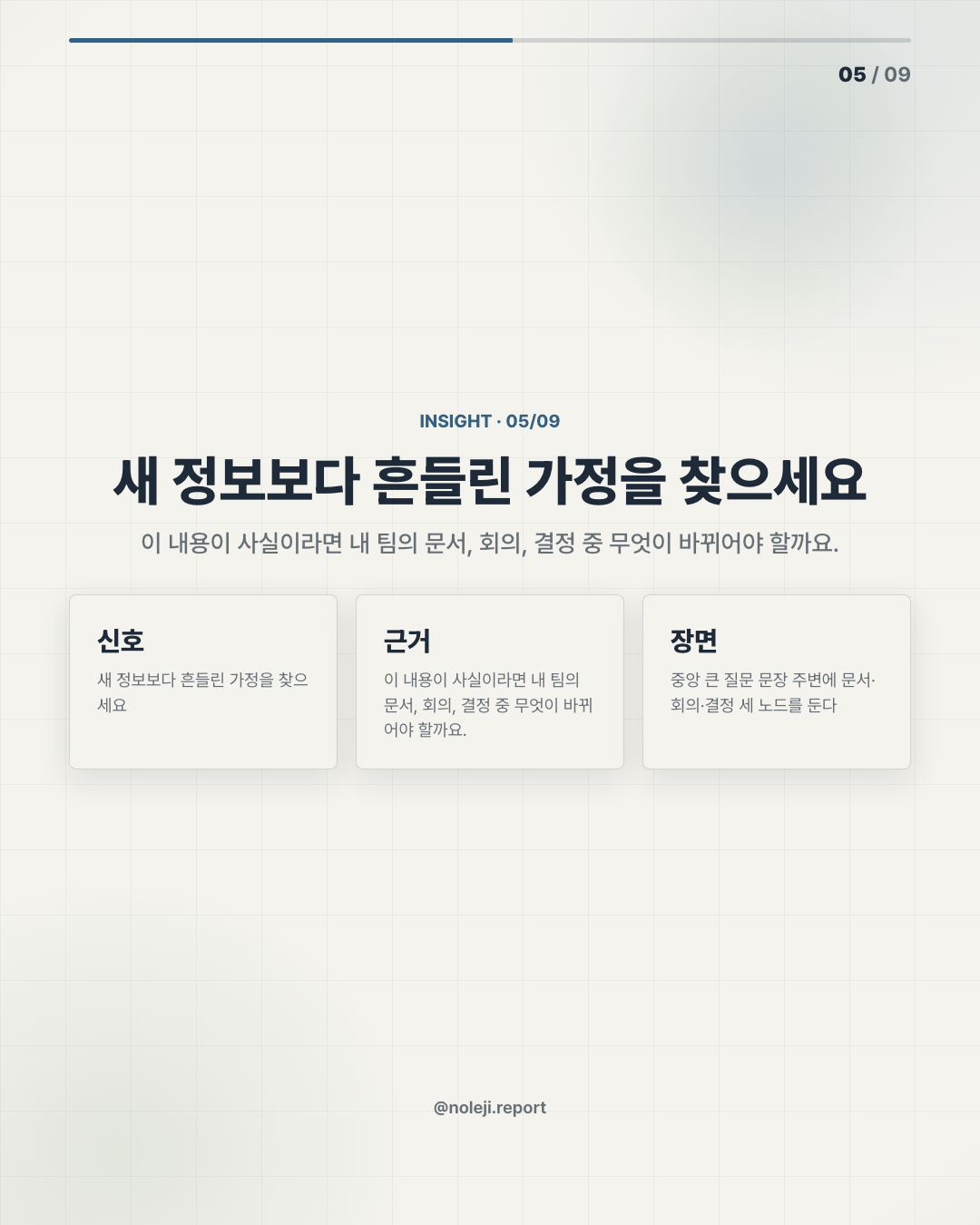
My thesis is simple, and not everyone will agree with it: for non-developers, the practical value of many AI-science updates is not the feature claim. It is the workflow they reveal. The question is not “Is this breakthrough real?” first. It is “What kind of work pattern is becoming normal if this is even directionally true?”
“Keep up with AI” is too vague to survive Monday morning
A lot of people treat AI news like market weather. They scan the headline, feel briefly behind, save the post, and return to the same spreadsheet, meeting notes, or client deck.
I have done this too. Last week I saved three science-related AI items and used none of them in my actual work until I forced myself to translate each one into a sentence that began with: “If this holds, the job changes by…”
That small rewrite mattered. A headline asks for attention. A workflow asks for behavior.
The trap is that “staying informed” sounds responsible, but it has no end condition. You can read ten posts and still not know what to do at 2 p.m. A workflow has a different shape: input, judgment, next action, review. That is the level where non-technical professionals can actually build future readiness without pretending to be researchers or engineers.
The New Scientist item should be treated as a work-pattern test, not a verdict
The manifest gives us one source: a New Scientist Threads post. That is thin evidence. We should say that plainly.
A social post is not a paper, not a product manual, and not enough to prove a durable trend by itself. But it can still be useful if we treat it as an early operator prompt. New Scientist’s role here is not to give office workers a complete implementation plan. It is to surface a science-facing change that may later flow into tools, policies, training, and business routines.
The useful move is to separate three layers:
| Layer | Bad reading | Better reading |
|---|---|---|
| Headline layer | “AI is changing science again.” | “What exact task is becoming easier, faster, or more automated?” |
| Evidence layer | “New Scientist mentioned it, so it matters.” | “This is one source; I need the underlying study, institution, or method before I rely on it.” |
| Workflow layer | “I should learn more AI.” | “Which part of my weekly work would change if this task became cheap?” |
This is how I would translate the signal for a non-developer manager, analyst, marketer, educator, or operations lead:
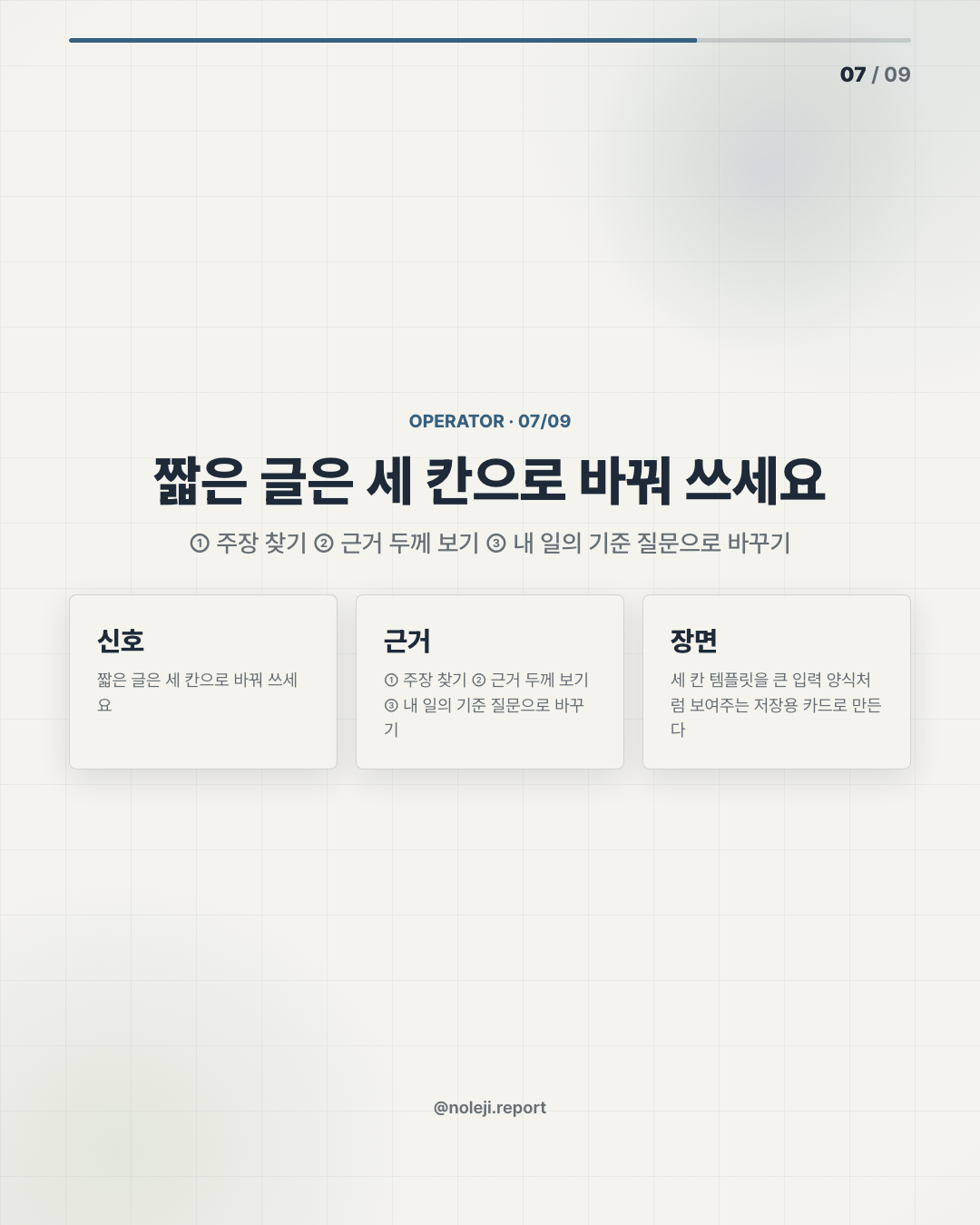
① Name the human task hidden inside the science story. Is it reading, searching, summarizing, simulating, drafting, classifying, checking, designing, or deciding?
② Ask where that task appears in your work week. Do you do it in reports, meetings, customer research, internal documentation, vendor review, compliance, or strategy planning?
③ Decide whether AI changes the first draft, the review step, or the final decision. These are not the same. If AI helps with first drafts, your bottleneck becomes editing. If it helps with review, your bottleneck becomes judgment. If it touches decisions, your bottleneck becomes accountability.
④ Write one testable sentence. Use this format: “If this capability becomes reliable, I would stop doing ___ manually and spend more time checking ___.”
Here is the risky part of my view: most people do not need more AI explainers. They need a personal operations map.
I do not mean a complicated automation system. I mean a living list of repeatable tasks. For example, every Monday I now keep a small “AI impact ledger” with only four columns: task, current pain, possible automation, risk. It is boring. That is why it works.
A flashy tool demo usually fades by Friday. A boring ledger changes how you notice your own work.
This does not work when the source is too thin or the task is safety-critical
There are cases where this workflow reading is not enough.
If the New Scientist post points to medicine, legal decisions, education assessment, hiring, public policy, or anything where a wrong answer harms a person, do not convert it straight into an automation idea. In those areas, the first workflow is verification, not adoption.
I also would not use a Threads post alone to brief a leadership team as if it were settled evidence. The responsible version is: “This is an early source cue. Before we act, we need the underlying research, independent coverage, and a check on what the system actually did.”
I have made the opposite mistake before. I once turned a compelling AI research summary into a workshop example too quickly. The demo sounded useful, but when someone asked what the failure mode looked like, I did not have a good answer. That was the moment I realized that “interesting” is not the same as “ready to operationalize.”
So the boundary is this: use weak signals to update your questions, not your commitments.
Keep one sentence, then test it this week
For today, do not try to “understand the whole AI science trend.”
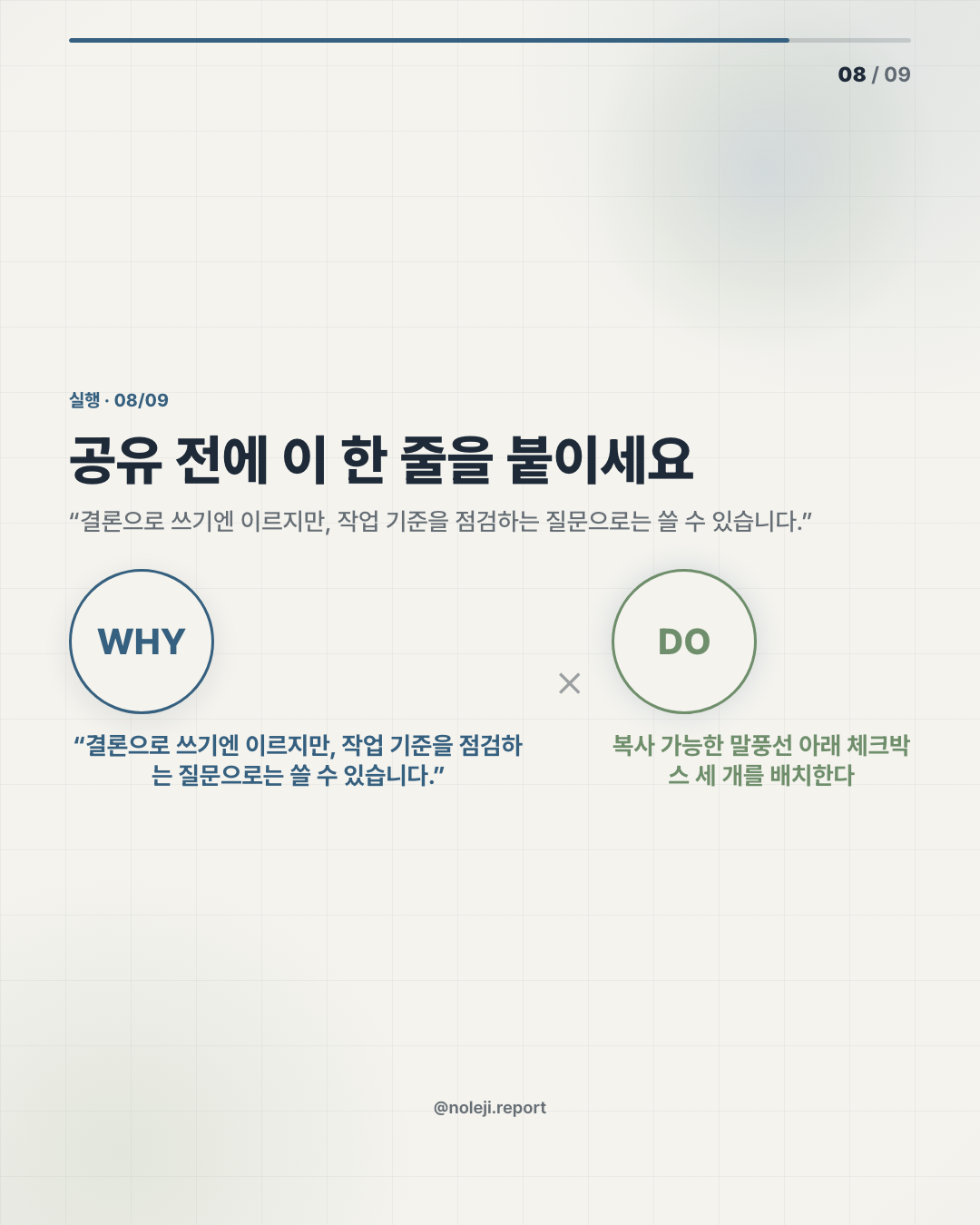
Keep this line and use it on the next science-AI item you see:
> If this becomes reliable, which repeatable part of my work stops being manual, and what new checking responsibility appears in its place?
That sentence is small enough to use in a meeting note, a personal knowledge base, or a team Slack thread. It turns a feed item into a work question.
My primary next step: pick one recurring task from this week and run the four-column ledger on it before Friday.
Next piece: I will take this same method one level deeper and show how to turn a science headline into a practical “automation boundary” without handing your judgment to the tool.
Take-aways
- At 8:17 this morning, I saw the New Scientist post in the same place most office workers now meet scientific news: a fast-moving social feed, one thumb movement away from email.
- The temptation is to ask, “What did they discover?” I think that is the wrong first question.
- My thesis is simple, and not everyone will agree with it: for non-developers, the practical value of many AI-science updates is not the feature claim
→ 한국어 버전 →