A service update is not useful until it removes one handoff
Six minutes is enough time to forward an AI service link, add “worth checking?”, and accidentally create an hour of extra work for someone else. That is why today’s services brief starts in an uncomfortable place: not with the tool, but with the handoff it creates. The manifest gives us one public source note from www.threads.com, and not much more.
My thesis is simple: for service teams, the first question today should not be “What can this AI service do?” It should be “Which human handoff does this actually remove, and what new checking work does it add?”
Everyone wants the tool to be the answer
The common habit is easy to understand. A new AI service appears, someone sees a post, and the team asks whether they should try it. I have done this myself with research tools, meeting-note tools, and small automation services that looked useful at 10 p.m. and became messy by Monday morning.
The trap is that services work rarely breaks because people lack one more app. It breaks because work passes through too many hands: request, clarification, draft, review, revision, approval, follow-up. If an AI service only adds another place to paste text, it may feel modern while leaving the real delay untouched.
For non-developer teams, this matters even more. You may not control the stack, the API, or the procurement process. But you do control the small systems around your work: what you ask for, what you check, what you repeat, and what you refuse to automate until the risk is clearer.
The useful test is boring, and that is why it works
The only source in today’s manifest is listed as “www.threads.com source note.” That is a thin evidence base. A single social post can point to a trend, but it cannot prove reliability, adoption, pricing stability, privacy posture, or long-term product direction. So I would not treat today’s item as a recommendation. I would treat it as a reason to run a small service check.
Here is the portable artifact I would keep:
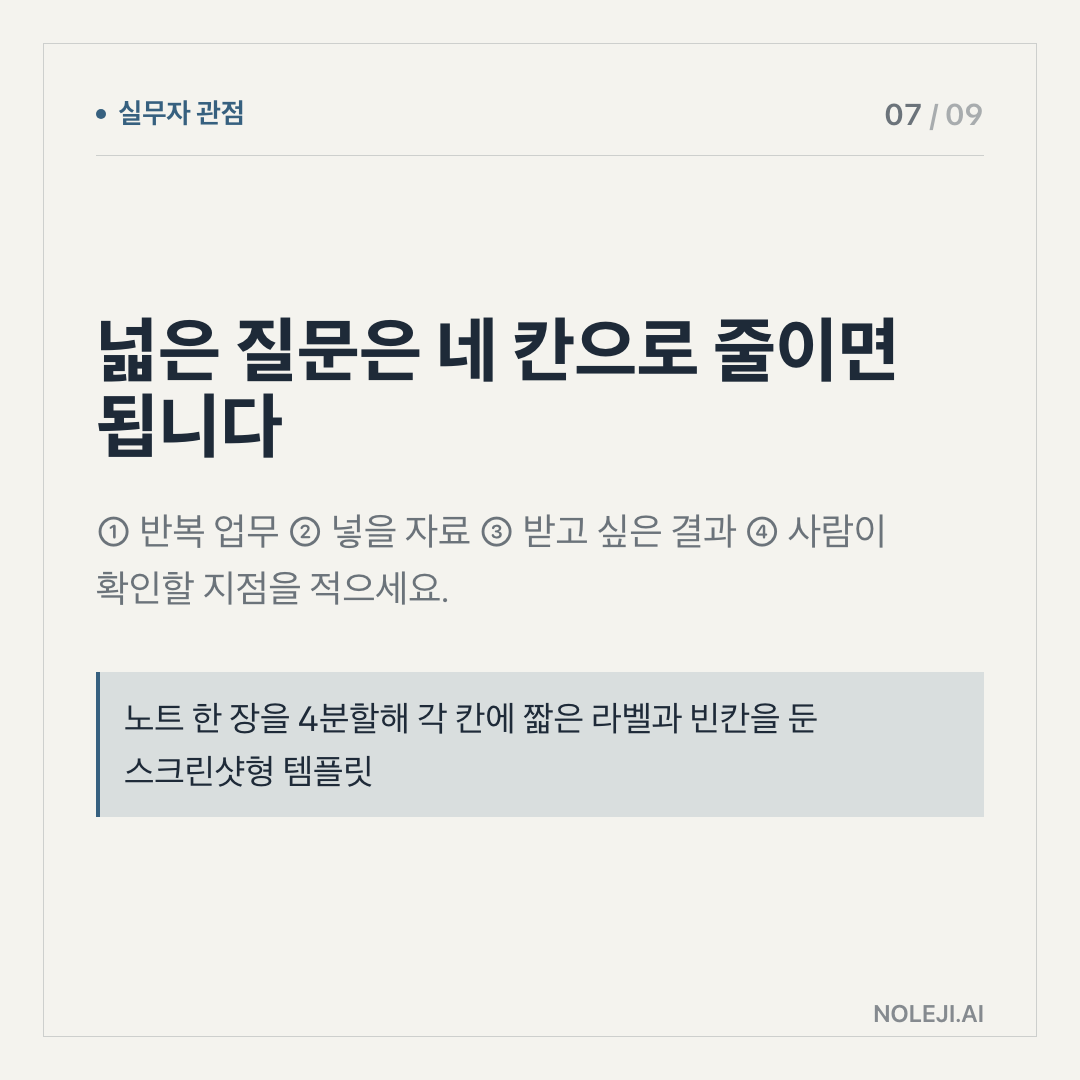
| Check | Good sign | Warning sign |
|---|---|---|
| Handoff removed | One person can finish a step without waiting for another person | The tool creates a new “please review this output” loop |
| Input clarity | The service works with normal work material: notes, docs, emails, tickets | It needs carefully polished prompts every time |
| Verification cost | A human can check the result in 2-5 minutes | Checking takes as long as doing the work manually |
| Repeat value | The same workflow appears at least 3 times a week | It solves a one-off curiosity |
| Risk surface | No sensitive client, HR, legal, or financial data is needed | The service needs private data before it proves value |
| Exit option | Output can be copied into existing tools | Work becomes trapped inside the service |
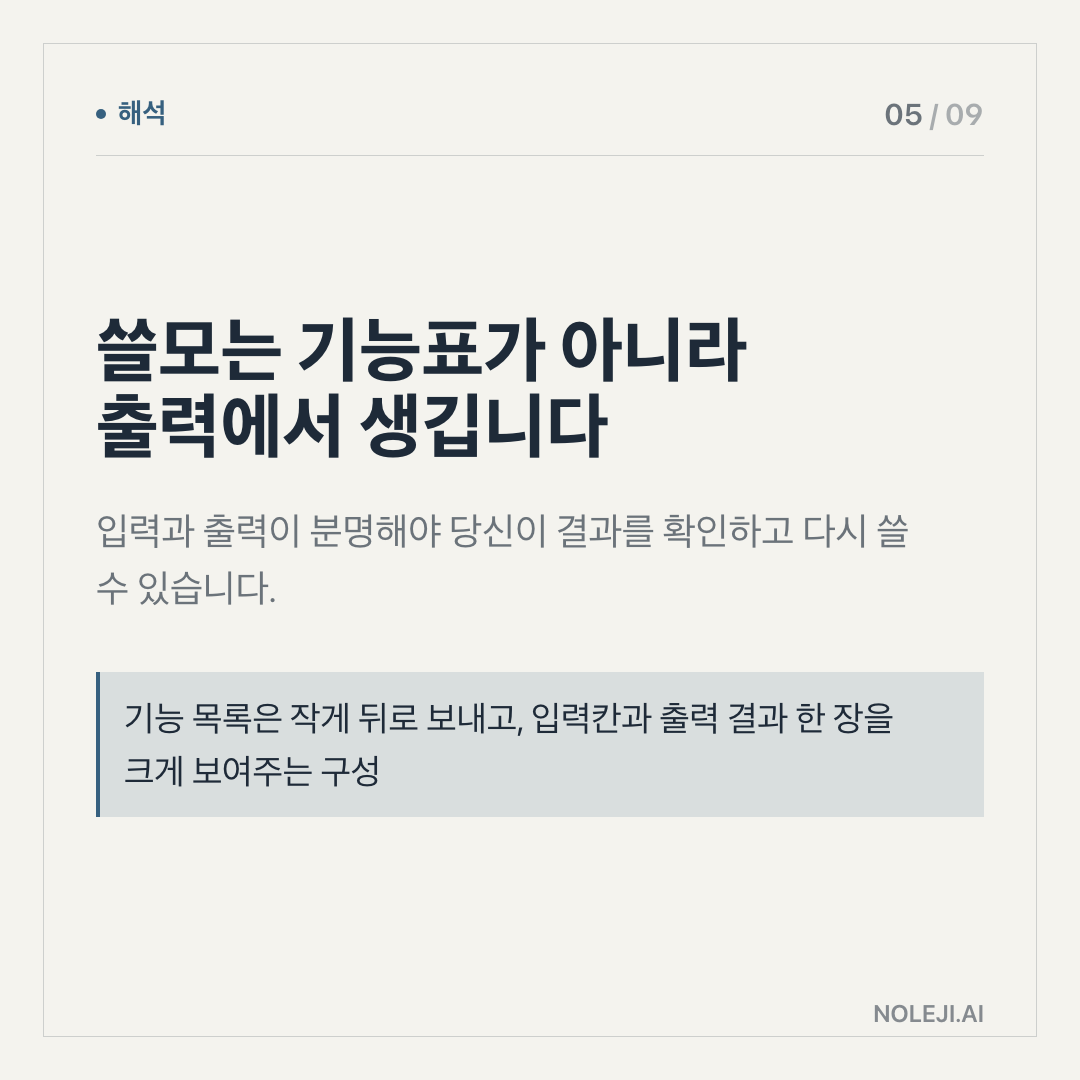
This table sounds modest, but it changes the conversation. Instead of asking whether an AI service is impressive, you ask whether it shortens a real path.
Last week, I used this exact frame on a content workflow. The candidate tool could summarize source material quickly. That part worked. The failure came later: the summary still needed fact-checking, tone editing, quote verification, and formatting. It did not remove the editor’s job. It only moved the editor’s job to a different screen.
That does not make the service useless. It means the right use case was narrower. It was helpful as a first-pass sorter, not as a publishing assistant.
This is where I draw a harder line than many “AI productivity” conversations do. A service deserves attention only when it changes the unit of work. If it saves 15 minutes once, fine. If it removes a repeated handoff every Tuesday, it belongs in the system.
Some work should stay slow
There are cases where this check will reject tools that look exciting. That is not a failure.
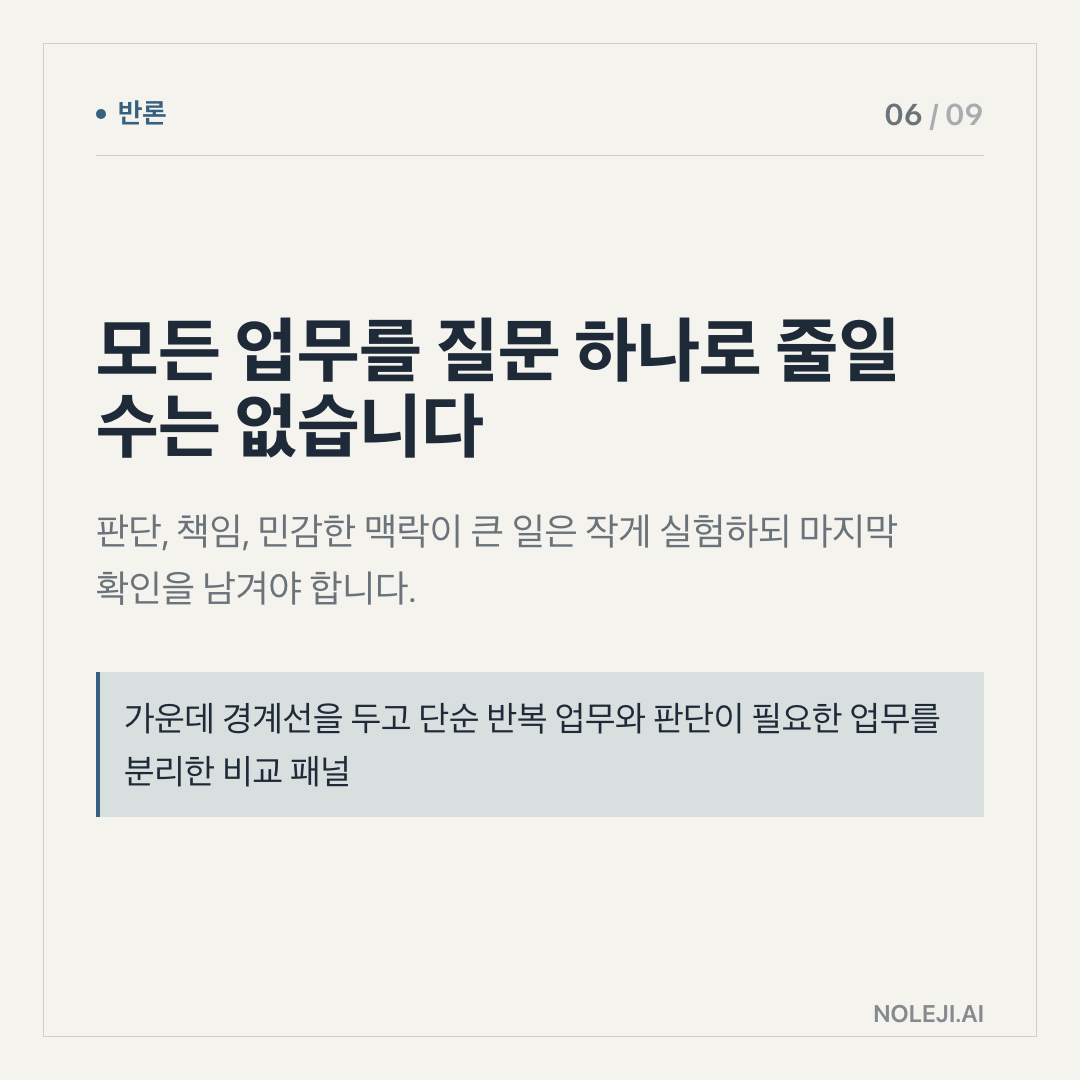
If the work involves judgment, reputation, confidential data, or emotional nuance, automation may still help around the edges, but it should not pretend to own the center. A customer apology, a pricing exception, a legal interpretation, or a performance review is not just text production. It is responsibility.
The other limit is evidence. With only one Threads signal in the manifest, we do not have enough to claim what the service does well, who is using it, or whether it will last. I would rather say that plainly than dress a thin source as a trend.
For me, the practical stance is this: test the workflow before trusting the service. A weak tool inside a strong workflow is manageable. A shiny tool inside a vague workflow usually becomes clutter.
Do this before you share the next AI service link
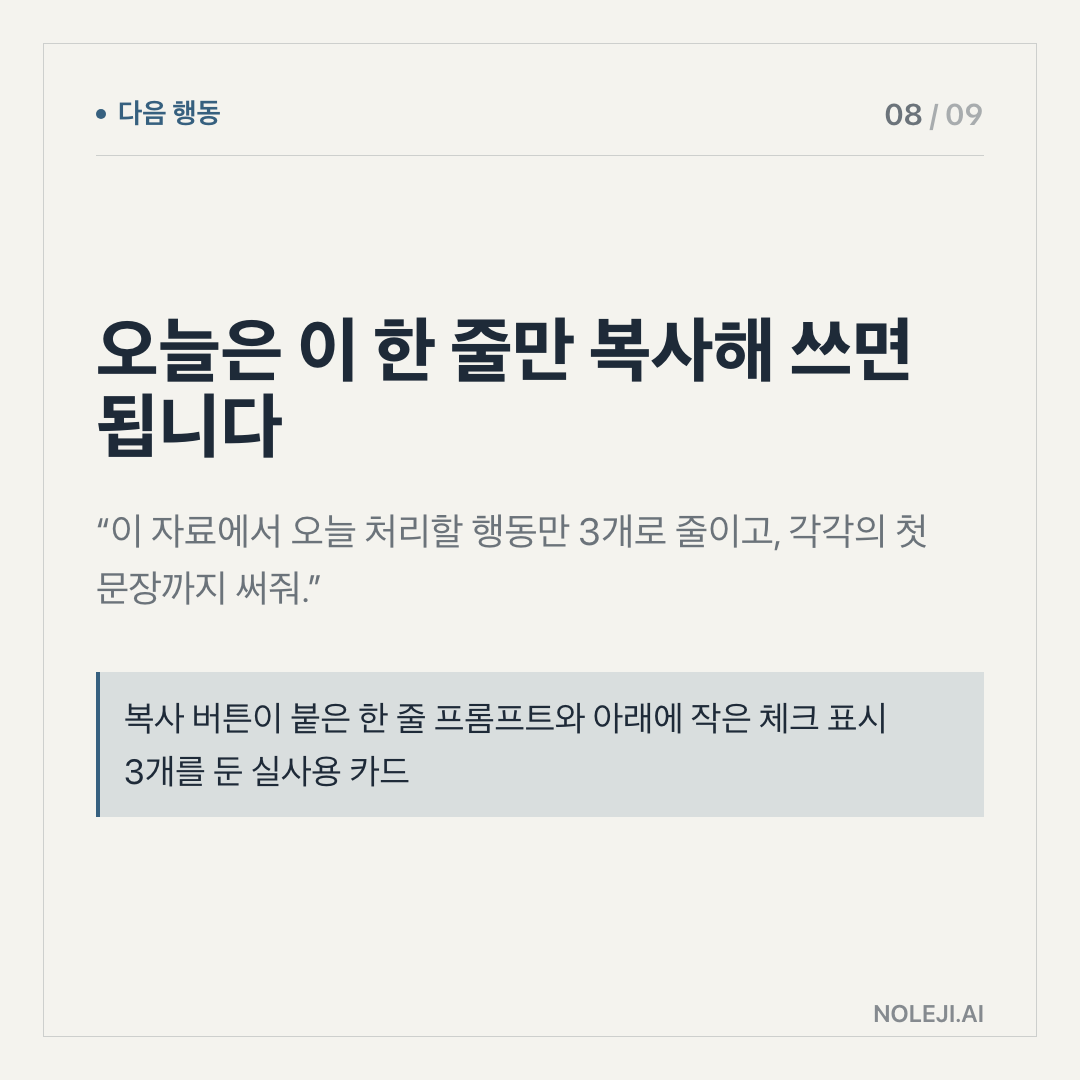
Before forwarding today’s AI service signal to a teammate, add one line:
> “Let’s only test this if it removes this specific handoff: ______.”
Then fill the blank with a real step from your workday. Not “improve productivity.” Not “make research easier.” Something concrete, like “turn client notes into a first response draft,” “sort inbound requests before the morning meeting,” or “extract action items from vendor calls.”
If you want one next step, subscribe to the daily archive and use it as a filter, not a feed. The goal is not to chase every service signal. It is to build a smaller set of systems that give time back.
Next edition: I’ll look at how to separate AI services that genuinely reduce checking time from tools that only make the first draft arrive faster.
Take-aways
- Six minutes is enough time to forward an AI service link, add “worth checking?”, and accidentally create an hour of extra work for someone else
- My thesis is simple: for service teams, the first question today should not be “What can this AI service do?” It should be “Which human handoff does this actually remove, and what new checking work does it add?”
- The common habit is easy to understand
→ 한국어 버전 →