Would you save the New Scientist post, send it to someone, or change one routine because of it?
I would choose the third.
A science post is often treated as something to consume, but I think the better test is behavioral. If it cannot change a small habit, it may not deserve the attention it asks for.
My claim is simple, and arguable: the most useful thing a New Scientist item can do for a working adult is not make us feel more informed. It should make us handle uncertainty a little better the next time we work, share, decide, or plan.
One Threads post is enough to notice, not enough to overclaim
The available item here is narrow: a Threads post connected to New Scientist. That gives me one public reference point, not the full chain of reporting, data, expert context, or editorial reasoning behind it.
That limitation matters. I should not pretend that a single social post proves a scientific trend, a workplace shift, or a future scenario. I also should not turn the New Scientist name into a shortcut for certainty. Good publishing brands reduce noise, but they do not remove the reader’s job.
This is where I often see non-developer professionals get stuck. A colleague sends an AI or science link into a chat room with one sentence: “This looks important.” Then the room reacts for five minutes, saves the link, and returns to the same workflow as yesterday.
I have done this too. Last week, I caught myself saving three “useful” posts and changing nothing in my calendar, reading list, or work process. That is not learning. That is collecting.
The real upgrade is turning interest into a tiny operating rule
The small habit I would take from a New Scientist post is this: stop asking, “Is this interesting?” and start asking, “What would I do differently if this is directionally true?”
That question is useful because most science and AI news arrives before ordinary workers can fully verify it. We usually do not have the paper, the dataset, the lab context, the model card, or the time. What we do have is a morning commute, a team chat, a task list, and a few decisions that repeat.
So I would treat this kind of post as a prompt for better handling, not instant belief.
Here is the portable version I would keep:
| When you see a science or AI post | Old habit | Better small habit |
|---|---|---|
| It sounds surprising | Share it with “wow” | Add one line: “This is early; I’m watching whether it affects ___.” |
| It comes from a trusted name like New Scientist | Assume the summary is enough | Look for what is missing: method, sample size, date, or expert disagreement |
| It feels relevant to work | Save it vaguely | Write one possible workflow change in plain language |
| It may affect your field | Wait for certainty | Set a revisit point: this week, this month, or next quarter |
| You cannot verify it yet | Ignore it or overreact | Label it as “watch,” “test,” or “act” |
For a non-developer office worker, this is like receiving an early notice from the finance team. You do not redesign the whole budget because of one message. But you may flag one expense category, ask one better question, or delay one decision until the official memo arrives.
That is the scale I trust.
A New Scientist post can change the way we read the day. It can make us slower to forward, sharper about evidence, and more willing to write down what would actually change if the claim holds up. Those are small habits, but they compound.
I would rather build that muscle than chase the feeling of being first.
The risk is becoming too cautious to learn
This approach can fail in two ways.
First, I may underuse a good source. If the original New Scientist post points to deeper reporting, a study, or a longer article, then treating it only as a small habit trigger may be too modest. Some stories deserve a full read, not a 90-second filter.
Second, “wait and verify” can become a polished excuse for doing nothing. I have seen people ask for more context forever because making a small change would disturb their routine. That is not skepticism. That is delay with better vocabulary.
So the line I would draw is this: do not make large claims from thin evidence, but do make small reversible changes when the direction is worth watching.
Try the 90-second archive test before your next share
Before you share the next science or AI post, try this once:
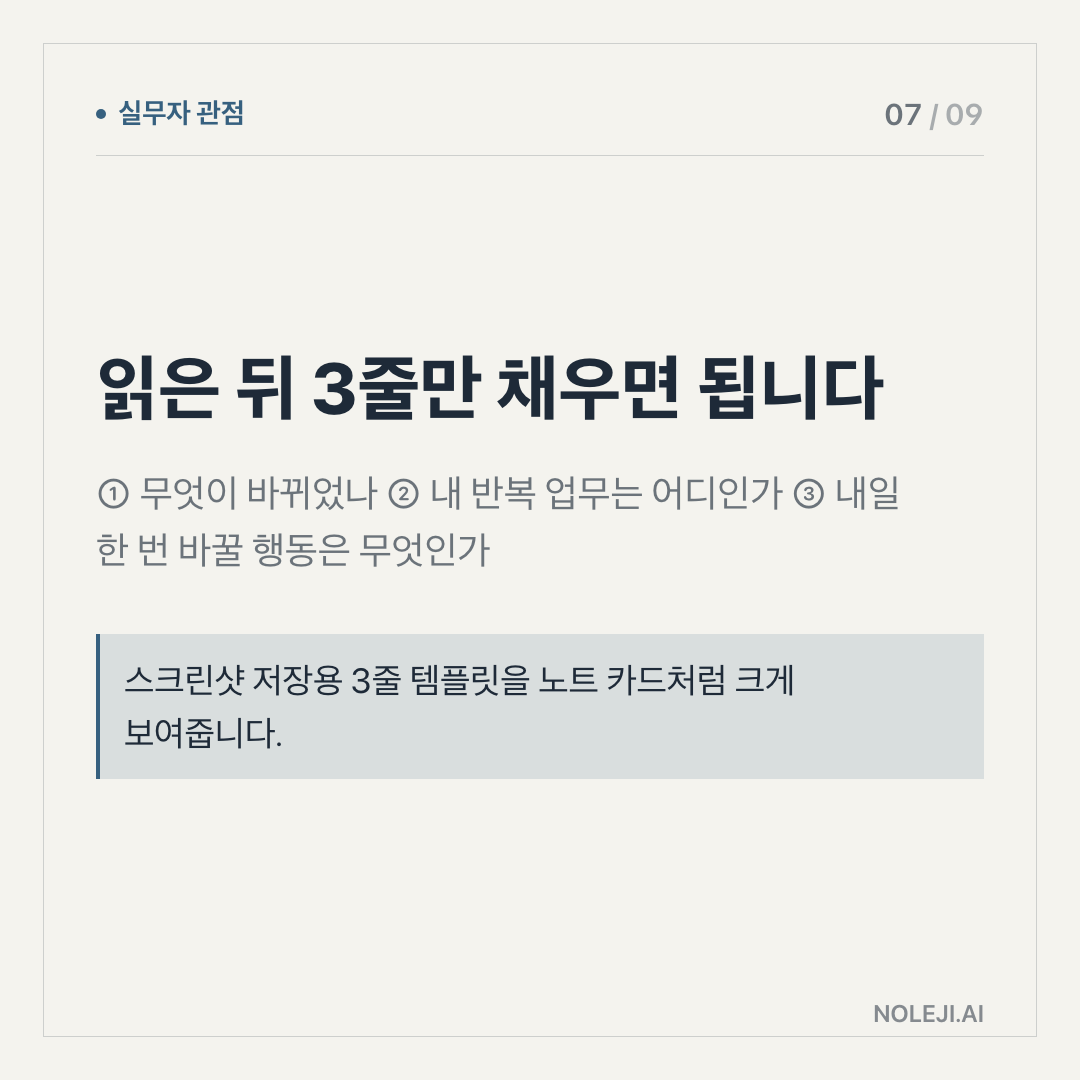
① What changed, in one plain sentence? ② What is still missing before I trust it fully? ③ What is one small habit I can test without betting the whole workflow?
복붙용 line:
> “This is worth watching, but I’m treating it as a small workflow test, not a settled conclusion.”
Primary next step: save the table and use it once today before forwarding a science or AI link.
Next piece: how to turn one technical post into a workplace note that helps people decide, without pretending the uncertainty is gone.
Take-aways
- I would choose the third.
- A science post is often treated as something to consume, but I think the better test is behavioral
- My claim is simple, and arguable: the most useful thing a New Scientist item can do for a working adult is not make us feel more informed
→ 한국어 버전 →