0 sources is not a small editorial detail
0 sources is where I stop typing faster.
That may sound strict, especially in AI work, where everyone is trying to move before the feed cools down. But for a non-developer using AI to save time, an empty source list is not just an editorial problem. It is a workflow problem.
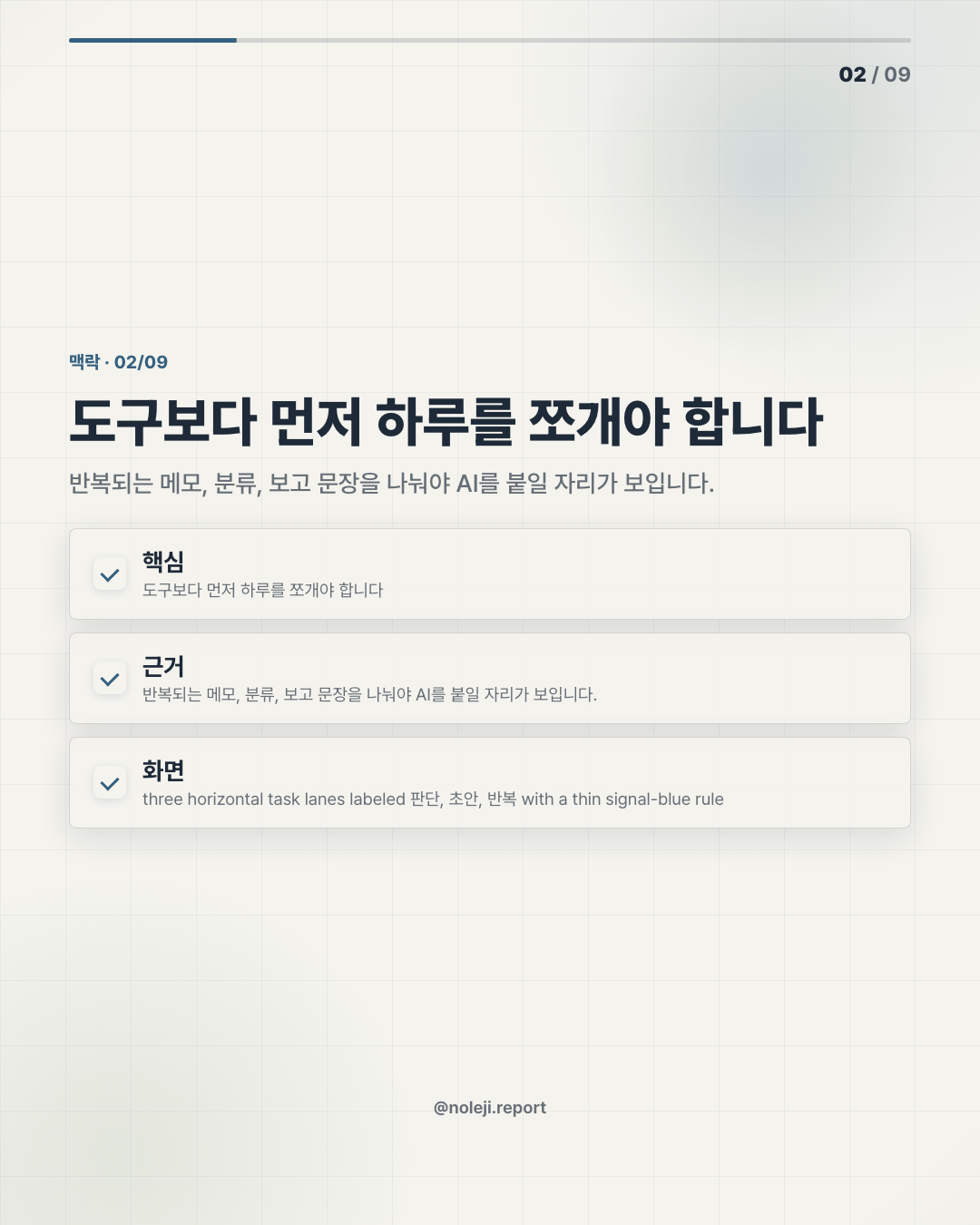
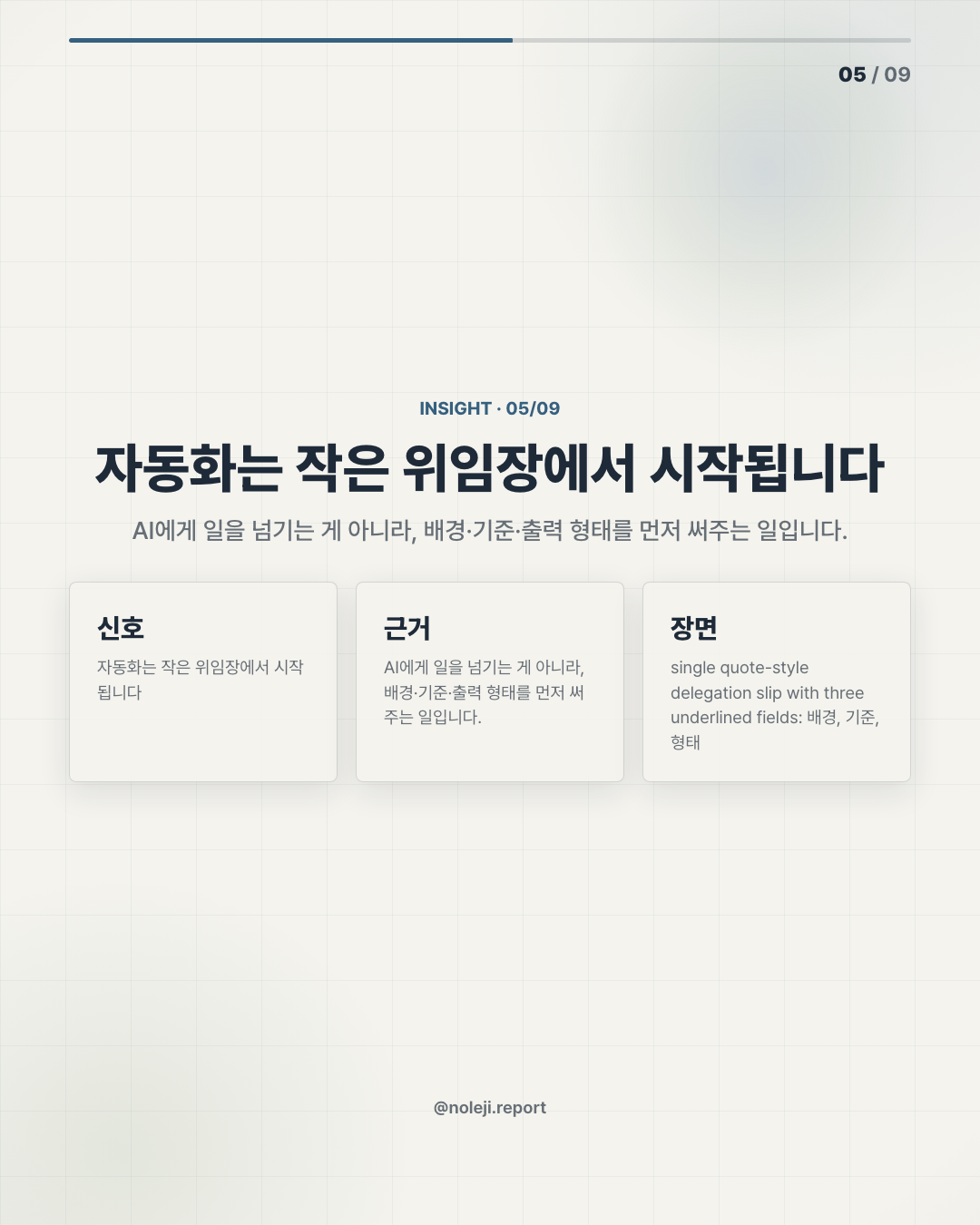
My thesis today is simple: the first useful AI system most office workers should build is not an automation. It is a source gate.
The trap is thinking speed comes first
A lot of people treat AI like a faster intern.
They paste a topic, ask for a summary, turn it into a post, and feel productive because something publishable appears in 40 seconds. I understand the temptation. Last week, I used an AI draft to turn a rough memo into a clean client update, and the first version looked almost too neat.
Then I checked the claims.
Two numbers had no basis. One company name was attached to the wrong example. The tone was confident enough that I almost missed it.
This is the quiet failure mode of AI at work: it does not always look wrong. It often looks finished.
A source gate beats a better prompt
Today’s archive item came in with one useful fact: there were no approved sources attached.
That is not enough to make a claim about a product, a company, a launch, or a trend. But it is enough to make an operator decision. When the evidence is empty, the job changes from “write the story” to “protect the system from publishing too early.”
I would rather have a boring source gate than a beautiful hallucinated analysis.
For non-developer workers, this matters because most AI mistakes do not happen in the model. They happen in the handoff. Someone forgets to separate “drafting” from “checking.” Someone treats a clean paragraph as evidence. Someone asks the tool to finish a task before the task has enough material to finish.
Here is the small artifact I would keep:
| Situation | Wrong move | Better move |
|---|---|---|
| No sources attached | Write around the gap with broad trend language | Mark as draft-only and request source confirmation |
| One weak source | Stretch it into a full argument | Say the evidence is thin and narrow the claim |
| Two or more solid sources | Summarize and compare | Build a thesis from the tension between them |
| Conflicting sources | Choose the cleaner story | Name the conflict and explain what cannot be concluded yet |
This is not a media-only rule. It applies to internal work too.
If you are preparing a market brief, the source gate is your table of links and dates. If you are asking AI to summarize customer feedback, the source gate is the raw feedback export. If you are building a weekly report, the source gate is the dashboard snapshot, not your memory of the dashboard.
I use this simple three-step filter before I let AI help me publish or send anything important:
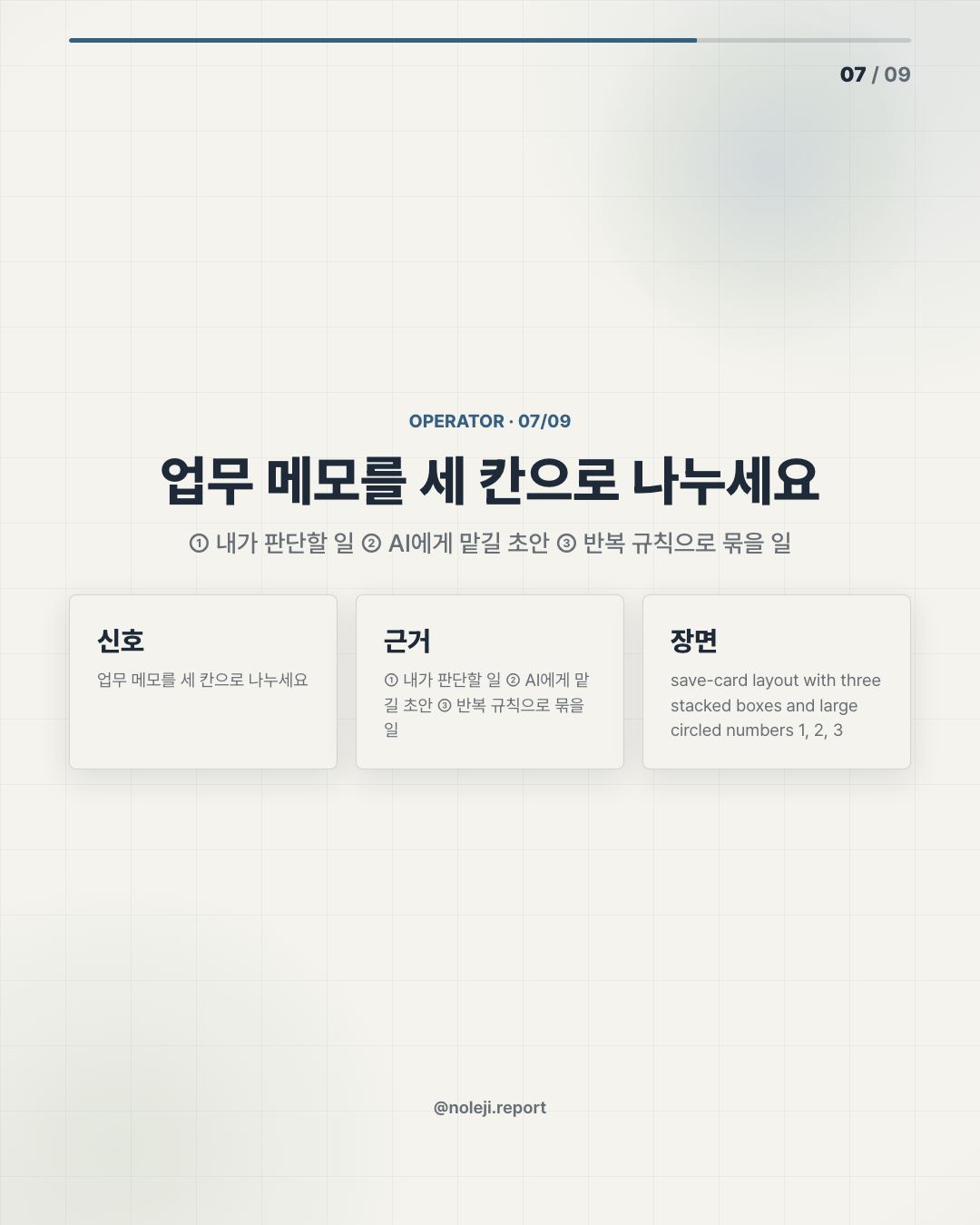
① What is the claim? ② What proves it? ③ What would make me lower the confidence?
If I cannot answer ②, I do not ask AI to make the sentence smoother. I ask it to help me find the missing evidence, or I downgrade the output into a note.
This rule will feel slow in the wrong room
There are cases where a strict source gate will not fit.
If you are brainstorming campaign ideas, writing fiction, drafting a personal reflection, or making an internal first pass that no one will treat as factual, you do not need to freeze every sentence until a source appears. Over-checking can kill momentum.
I have also seen teams use “we need more evidence” as a polite way to avoid making a decision. That is not what I mean.
The source gate is not a permission slip for endless caution. It is a label. It tells you whether the next action is drafting, verifying, publishing, or waiting.
In today’s case, with no approved sources, the honest label is not “public trend analysis.” It is “practical check.”
Keep this line before your next AI draft
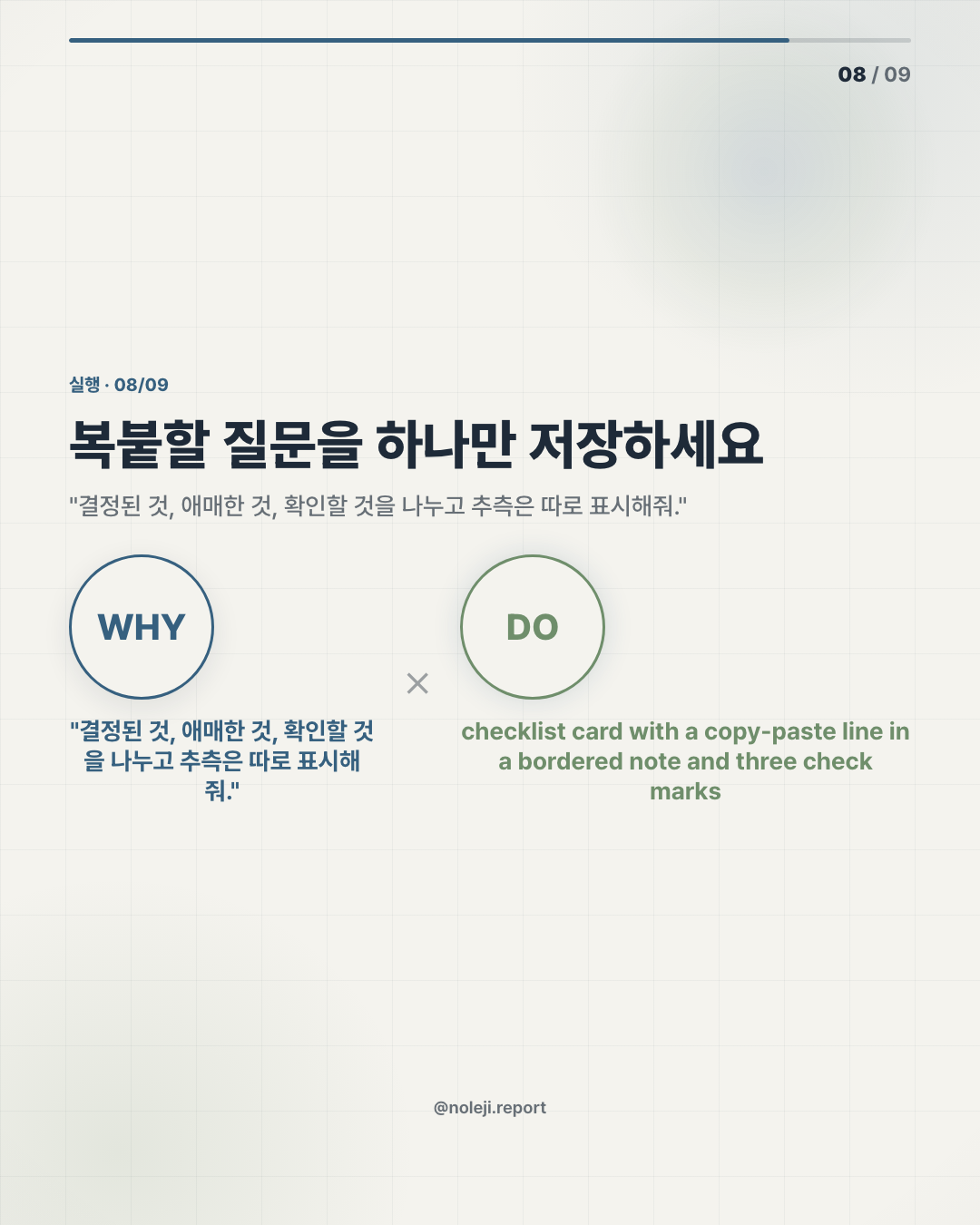
Copy-paste this before asking AI to write anything factual:
> If a claim has no source, mark it as unverified instead of making it sound complete.
That one sentence changes the relationship. You are no longer asking AI to impress you. You are asking it to preserve your judgment.
The next step: before your next report, post, email brief, or meeting memo, add a four-column source gate: claim, source, confidence, next action.
Next piece: how to turn that source gate into a reusable weekly AI workflow without making it feel like extra admin work.
Take-aways
- 0 sources is where I stop typing faster.
- That may sound strict, especially in AI work, where everyone is trying to move before the feed cools down
- My thesis today is simple: the first useful AI system most office workers should build is not an automation
→ 한국어 버전 →