At 9:00, the market does not wait for your calendar
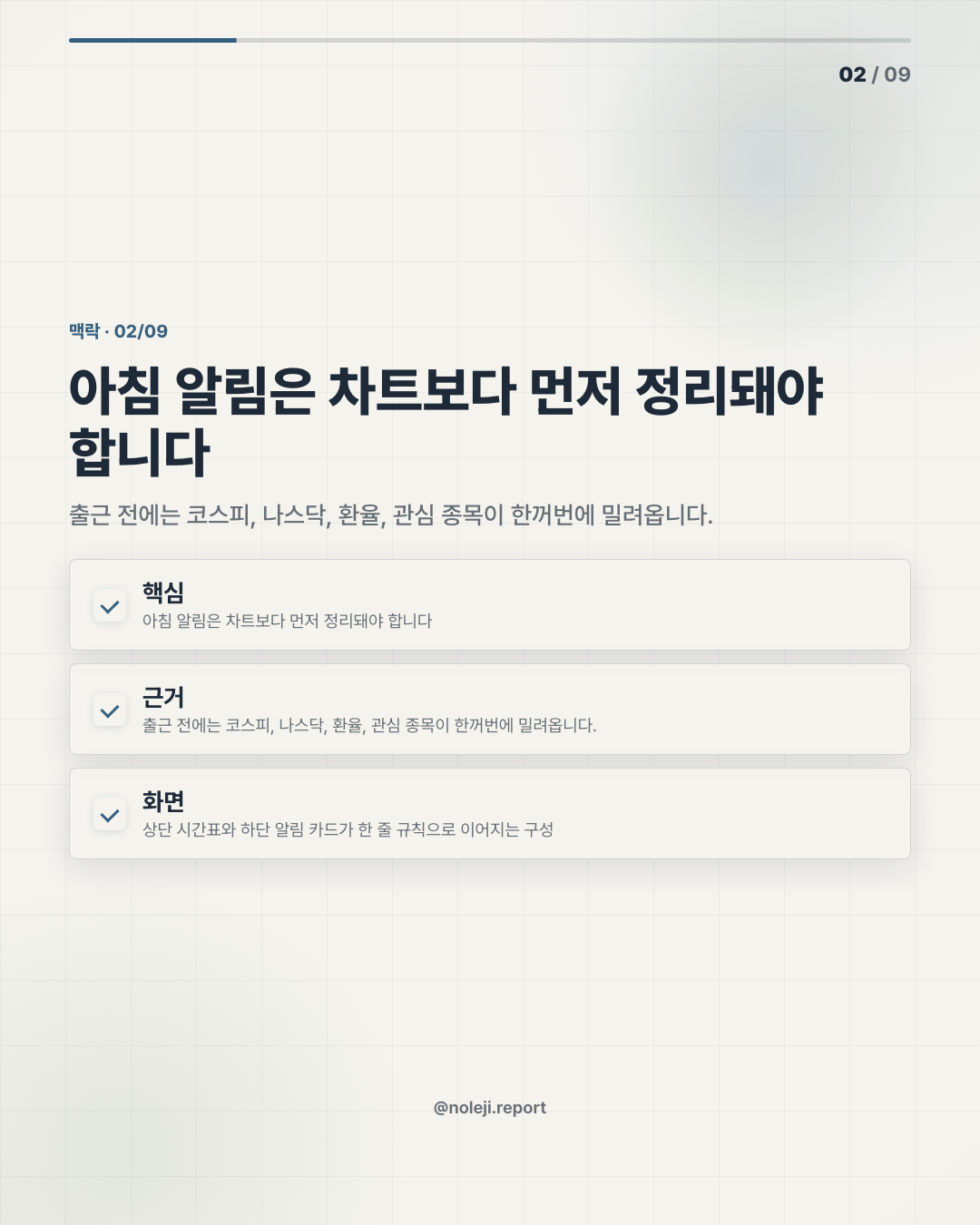
At 9:00 a.m., the market is already moving while most office workers are still clearing messages. One tab shows prices, another shows news, another shows a chart that looked harmless yesterday. If you are managing your own money on the side, the problem is rarely lack of information.
The problem is that information arrives at the exact hour when your paid work also starts.
My argument is simple: a personal stock-report bot built with GitHub Actions and Telegram is more useful than another “AI investing tool,” because it does not try to predict the market. It protects your attention.
Most people try to read more, then call it discipline
The usual answer to investing anxiety is more reading. More newsletters. More YouTube. More dashboards. More alerts. I understand the impulse. I have done the same thing: open three market pages before coffee, promise myself it will take five minutes, then lose twenty.
That approach feels responsible, but it has a trap. You turn investing into a second job without giving it a proper system.
A non-developer office worker knows this pattern well. If a manager says, “Please check everything important and tell me what matters,” the junior employee will panic unless the task has a format. What market changed? What crossed a threshold? What needs attention today? What can wait?
Automation works when it gives that junior employee a checklist. It fails when it becomes another noisy coworker.
The best personal finance automation is boring on purpose
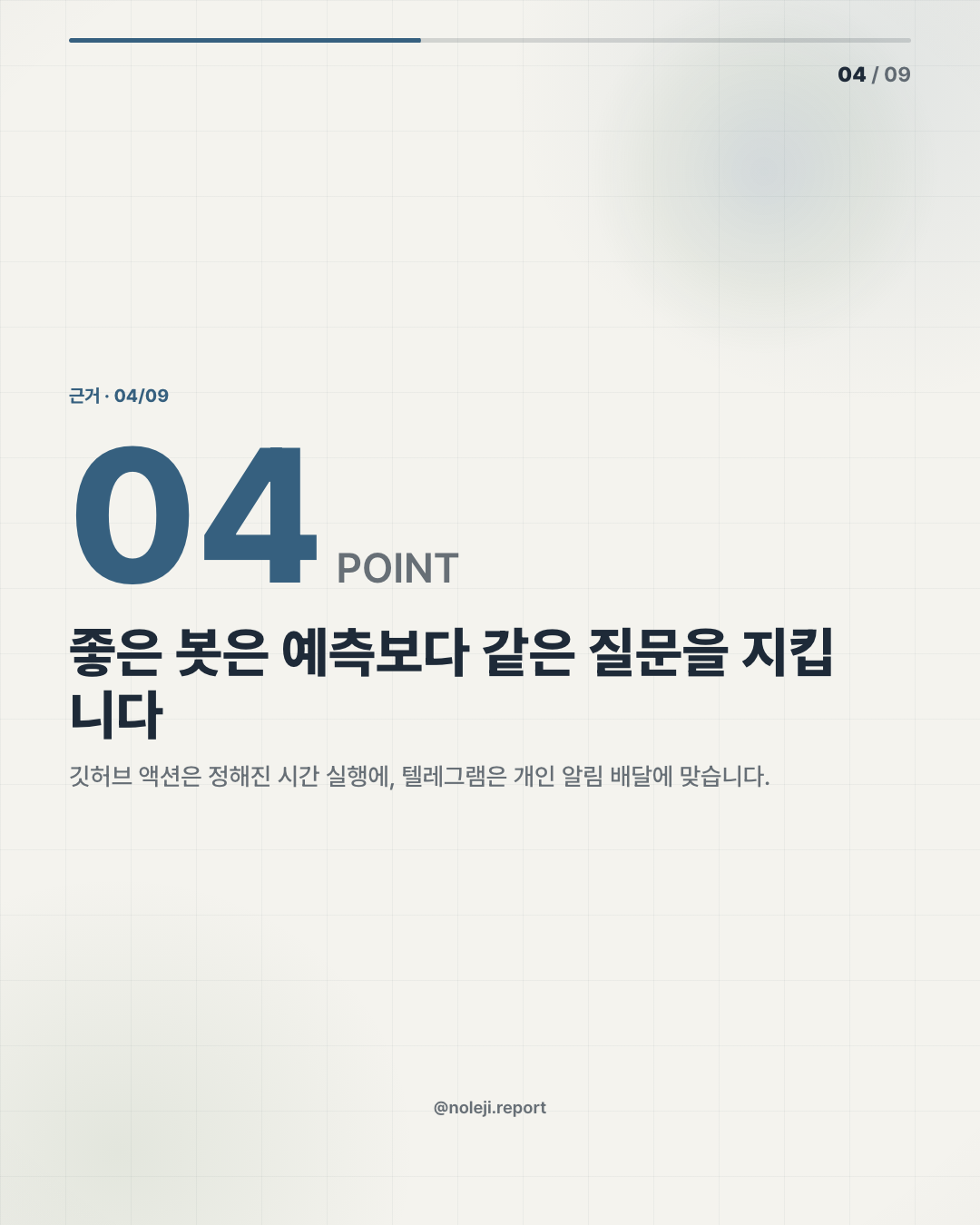
This open-source project matters because it uses tools that already fit a lightweight routine: GitHub Actions runs the task on a schedule, and Telegram delivers the result to a place many people already check. The source brief is thin, so I will not pretend we have performance numbers, a full repository review, or proof of investment returns. What we do have is enough to discuss the design choice.
The setup seems to come from a practical itch: the maker saw many OpenClaw-style examples automating personal finance work, but many of those depended on an LLM running on a Mac mini or a local machine. That is interesting for builders. It is less friendly for the average person who wants a report every morning without maintaining hardware like a tiny server under the desk.
GitHub Actions changes that texture. It turns “my computer must be awake” into “a scheduled workflow runs elsewhere.” Telegram changes the delivery problem. Instead of asking the user to visit a dashboard, the report arrives as a message.
That sounds small. I think it is the whole point.
For personal market monitoring, the winning system is not the smartest one. It is the one you will still use after three tired weeks.
Here is the comparison I would keep:
| Approach | What it asks from you | Where it breaks | Best use |
|---|---|---|---|
| Manual morning check | Time and focus every day | Busy workdays, emotional scanning | Occasional deep review |
| Dashboard | You must remember to open it | Becomes another tab | Active traders or analysts |
| Local Mac mini automation | Hardware, setup, maintenance | Sleep, network, updates | Builders who enjoy tinkering |
| GitHub Actions + Telegram bot | Clear rules and scheduled delivery | Secrets, API limits, shallow prompts | Personal daily briefings |
| LLM-heavy agent | Prompt design and verification | Hallucinated confidence | Summarizing known inputs, not deciding trades |
The investment angle is easy to overstate, so I will be careful. A bot like this should not tell you what to buy. It should tell you what deserves a second look.
That distinction matters. If your report says “Nvidia fell 4.2% after guidance concerns” or “KRW/USD crossed a threshold you set,” you can decide whether to read more. If it says “buy now,” you have built a fortune cookie with an API key.
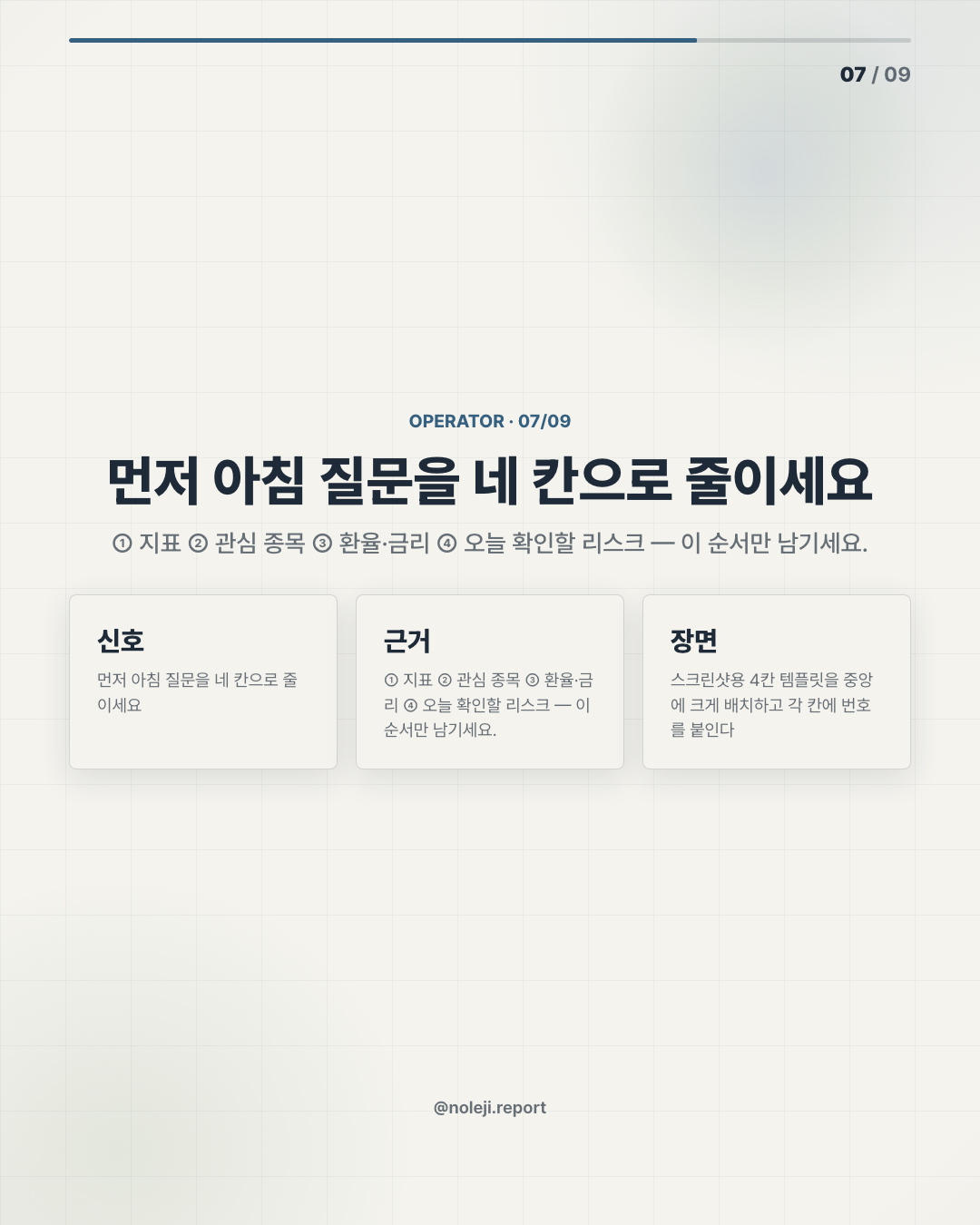
I would design the daily message around four blocks:
① What changed since the last report ② Which watchlist items crossed my own thresholds ③ What news deserves manual reading ④ What I should ignore today
The fourth line may be the most valuable. A good automation does not only surface signals. It also gives permission to stop checking.
For non-developers, the lesson is not “learn GitHub Actions tonight.” The lesson is to define the report before chasing the tool. If you cannot describe the message you want in plain language, the bot will only automate your confusion.
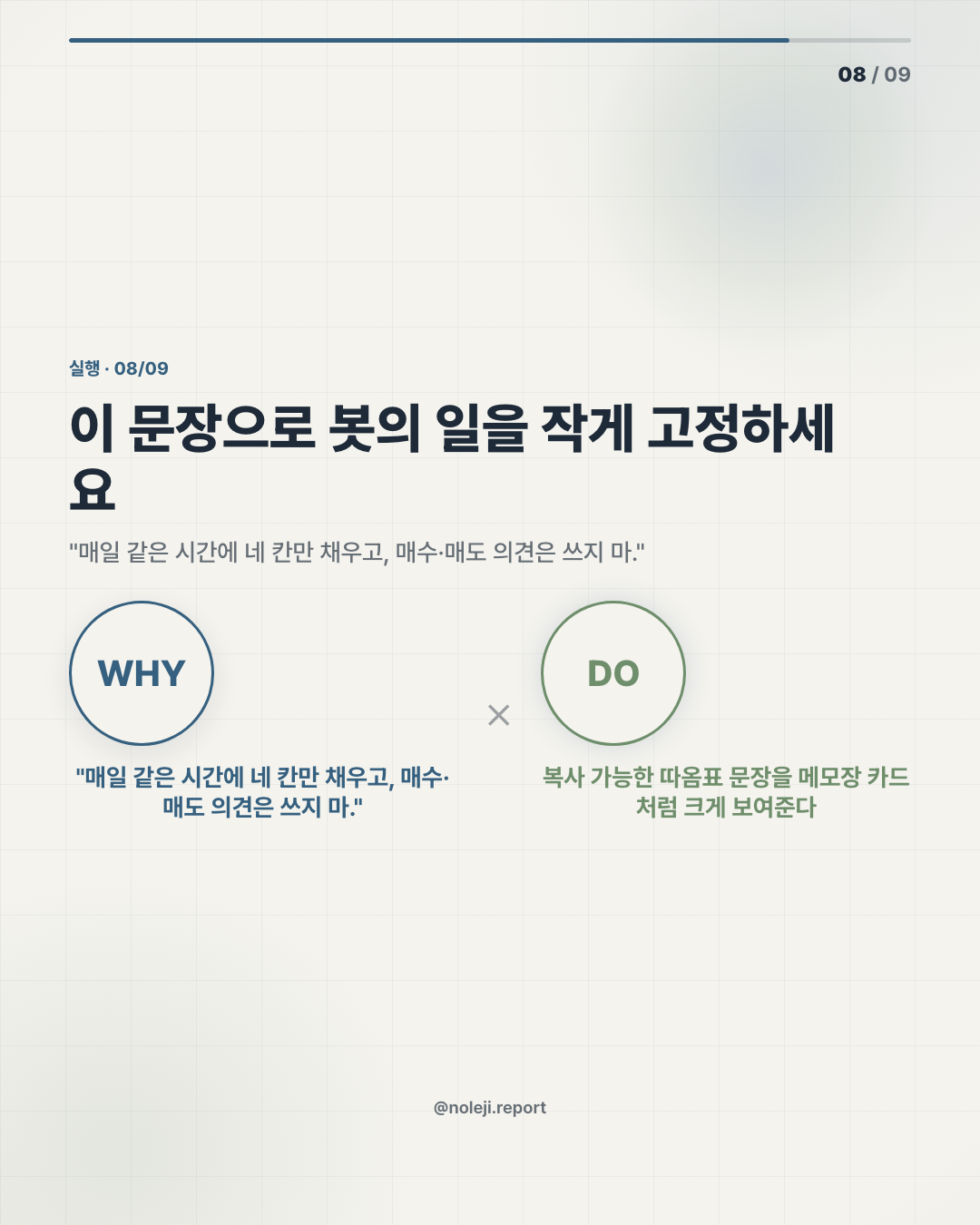
복붙용 line to start with:
> “Every weekday at 8:30, send me only the market changes that break my own rules, plus links I should read manually.”
That sentence is boring. Good. Boring is how a system survives.
This breaks when your rules are vague
There are cases where this kind of bot will not help.
If your investing style depends on minute-by-minute decisions, a Telegram morning summary is too slow. If your watchlist changes every day, scheduled automation may lag behind your own behavior. If the data source is unstable, the report becomes false comfort. And if you feed an LLM raw market headlines without strict boundaries, it may sound confident while mixing facts, guesses, and stale context.
I would also be cautious about secrets. Telegram bot tokens, brokerage API keys, and GitHub repository settings are not details to treat casually. A personal automation system should start with low-risk data: public tickers, watchlists, price thresholds, news links. Do not connect trading execution until the boring reporting layer has worked for a while.
My own rule is conservative: automate observation first, interpretation second, action last.
Build the report before you build the bot
If I were adapting this idea today, I would not start in GitHub Actions. I would open a blank note and write the message I wish I had received this morning.
Then I would make it smaller.
Use this checklist:
- Pick 5 to 10 assets you actually care about.
- Set 2 or 3 thresholds that would make you pay attention.
- Decide one delivery time.
- Separate facts from commentary.
- Add one “read manually” link section.
- Remove anything that would make you trade in a hurry.
That is enough for a first version. The future of work will not arrive only as giant AI platforms. For most office workers, it will arrive as small systems that give back ten minutes here, one decision there, one calmer morning at a time.
Primary next step: save the checklist and draft your own one-message daily market report before choosing any tool.
다음 편에서는 이 아이디어를 더 넓혀서, “개인 자동화 봇을 만들 때 LLM을 넣어야 하는 부분과 절대 넣지 말아야 할 부분”을 나눠보겠습니다.
Take-aways
- At 9:00 a.m., the market is already moving while most office workers are still clearing messages
- The problem is that information arrives at the exact hour when your paid work also starts.
- My argument is simple: a personal stock-report bot built with GitHub Actions and Telegram is more useful than another “AI investing tool,” because it does not try to predict the market
→ 한국어 버전 →