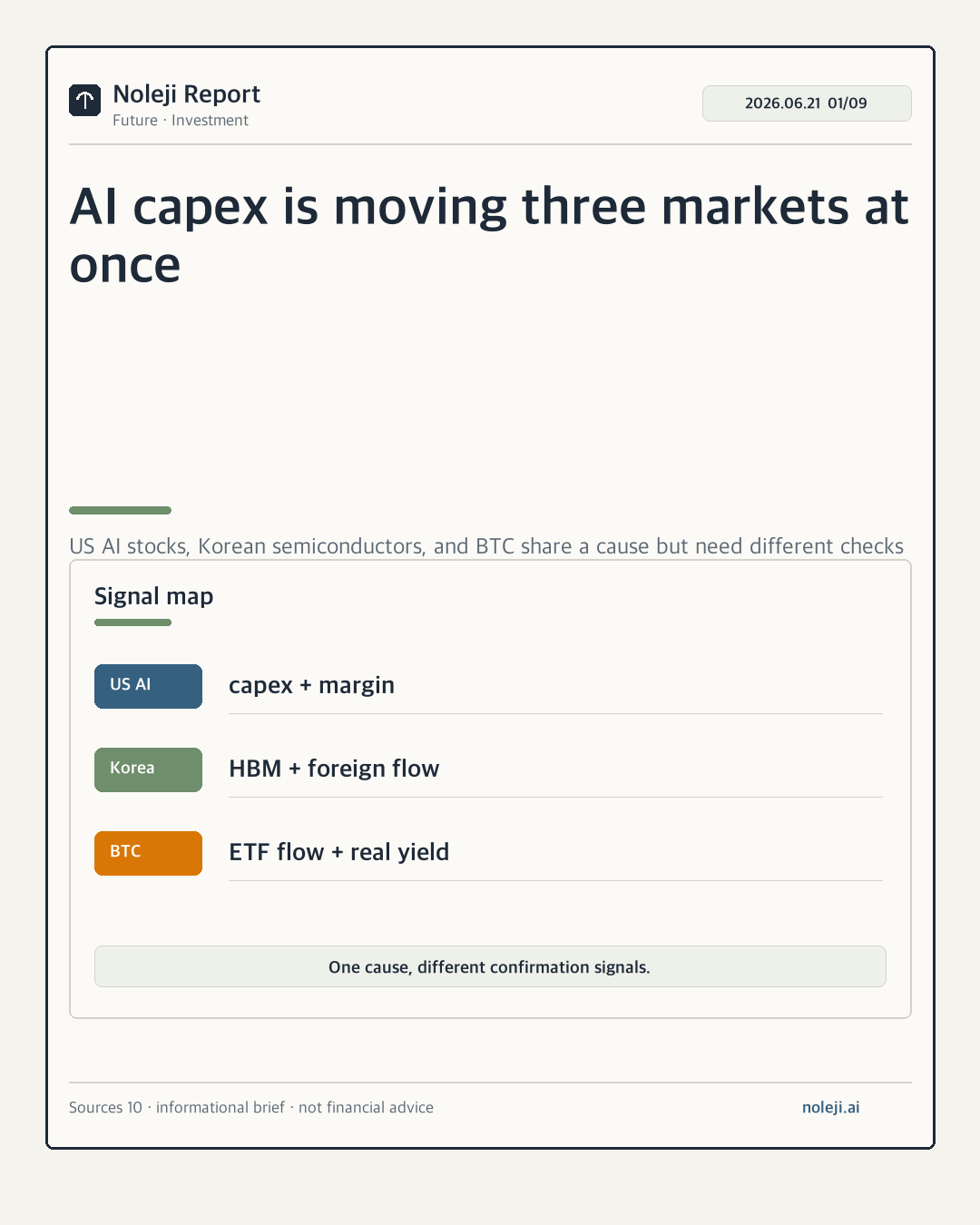
Today's question: is AI capex still oxygen, or is it becoming a cost burden?
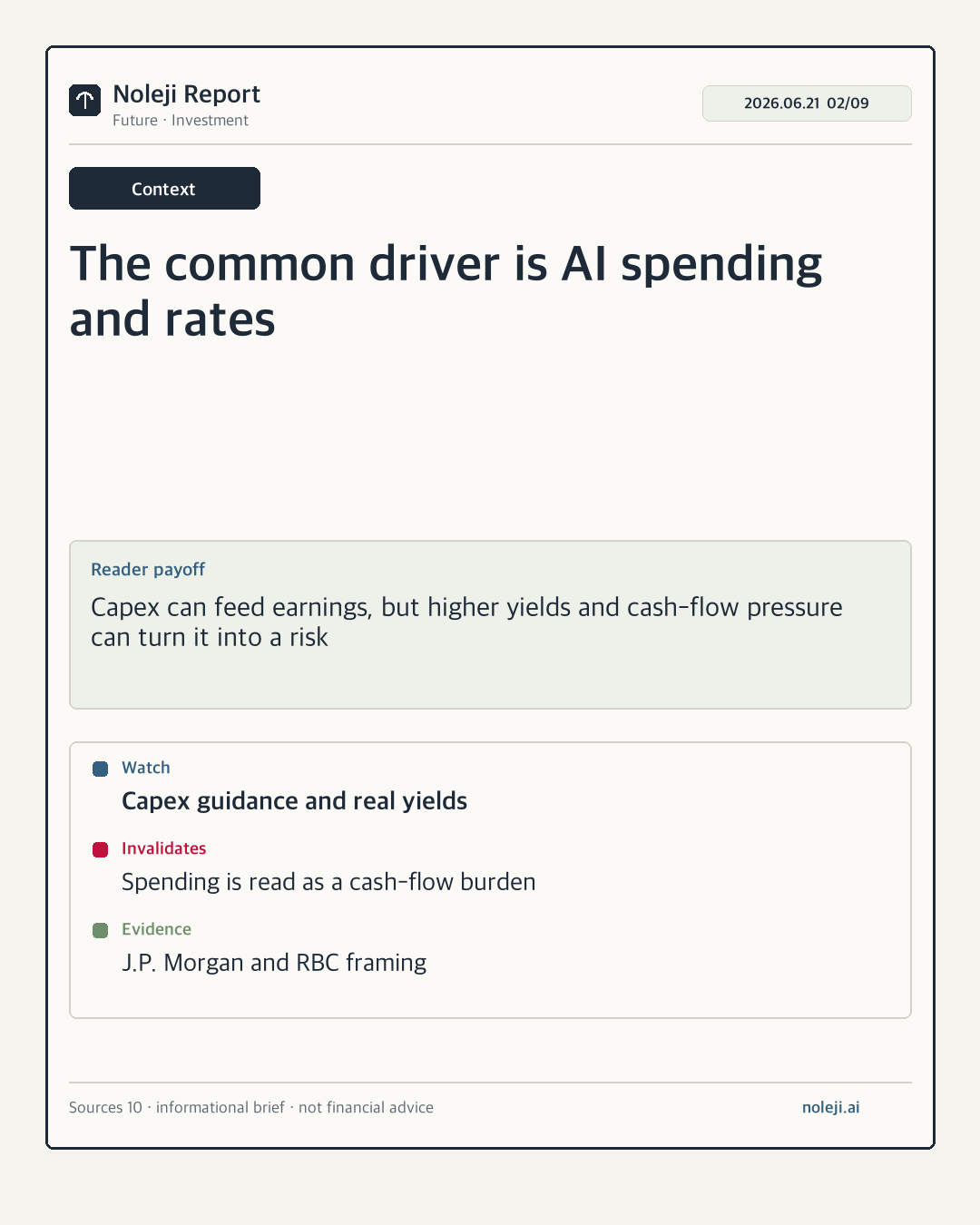
The important question is not which ticker is exciting today. It is whether AI capex is still feeding the market, or whether rates and cash-flow pressure are starting to change the interpretation. US AI semiconductors, Korean chip makers, and Bitcoin can all sit inside the same risk cycle, but they do not move for the same reason.
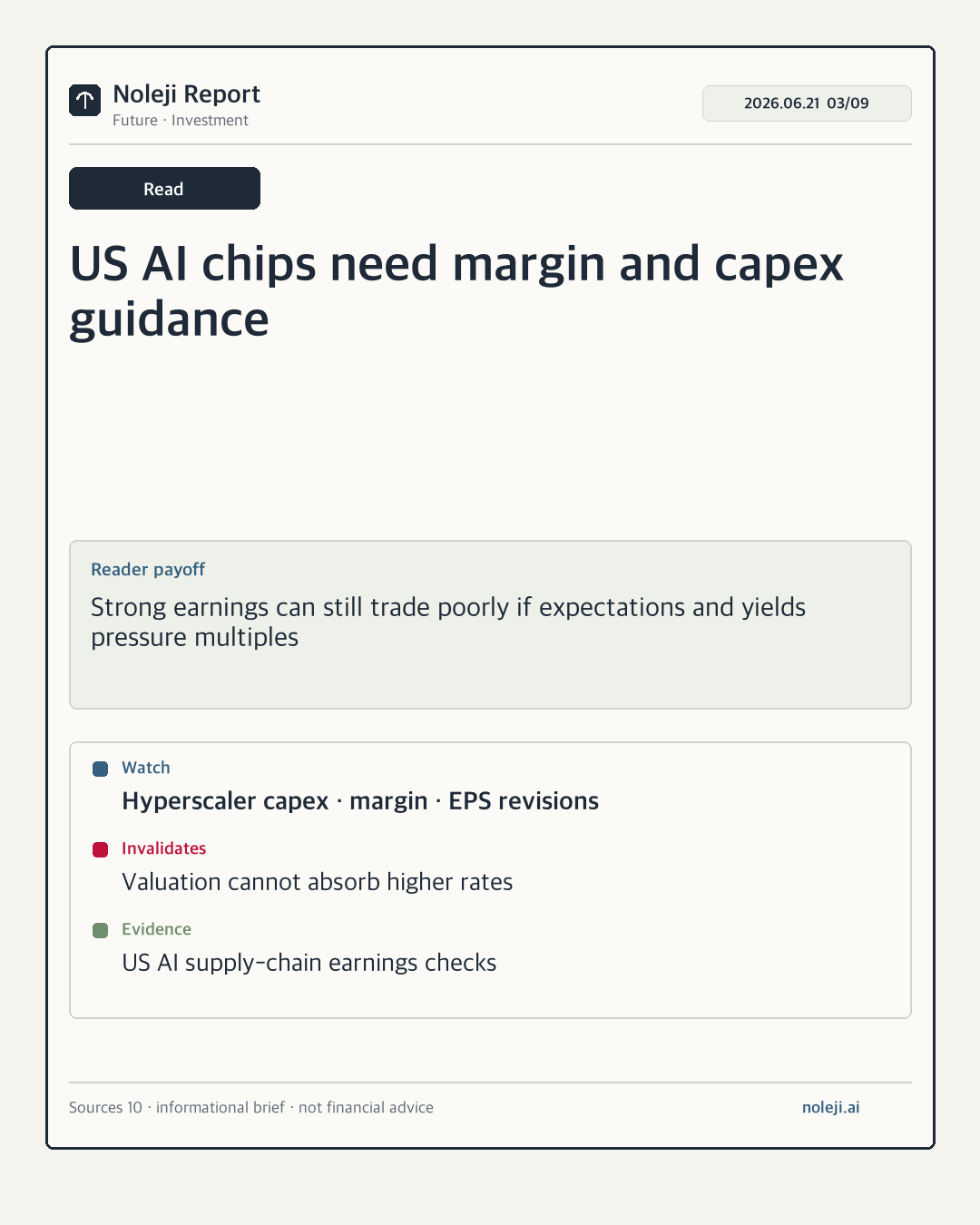
For the US AI semiconductor chain, the bullish case is strongest when hyperscaler capex turns into revenue, margin, and positive EPS revisions. The risk is that the same capex begins to look like a cash-flow burden, especially if Treasury yields pressure valuation multiples. The useful reading from J.P. Morgan and RBC is balanced: AI investment can support earnings, but the spending must keep proving itself in final demand.
Korean semiconductors are not a simple copy of the US AI trade
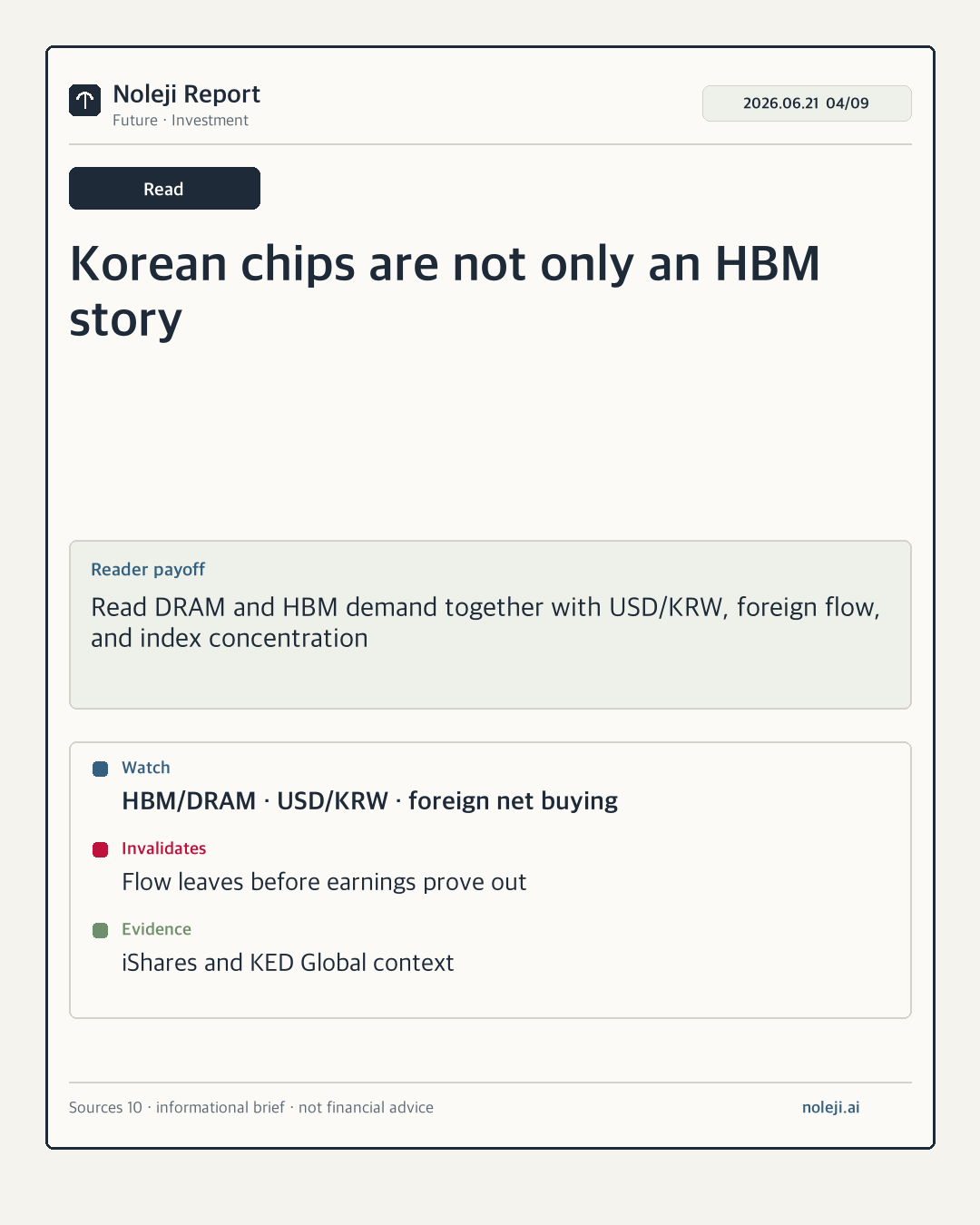
Korean semiconductors are one of the clearest ways AI infrastructure spending turns into memory and HBM demand. iShares frames Korea as Asian manufacturing exposure to AI infrastructure, with Samsung Electronics and SK Hynix carrying large index weight. That is constructive, but it is not the whole story.
KED Global's market context points to foreign selling, won weakness, and IPO-related demand as short-term pressure points. That means Korean semiconductors should be read through two lenses at once: AI memory demand and market plumbing. DRAM and HBM pricing matter, but so do USD/KRW, foreign net buying, earnings guidance, and index concentration.
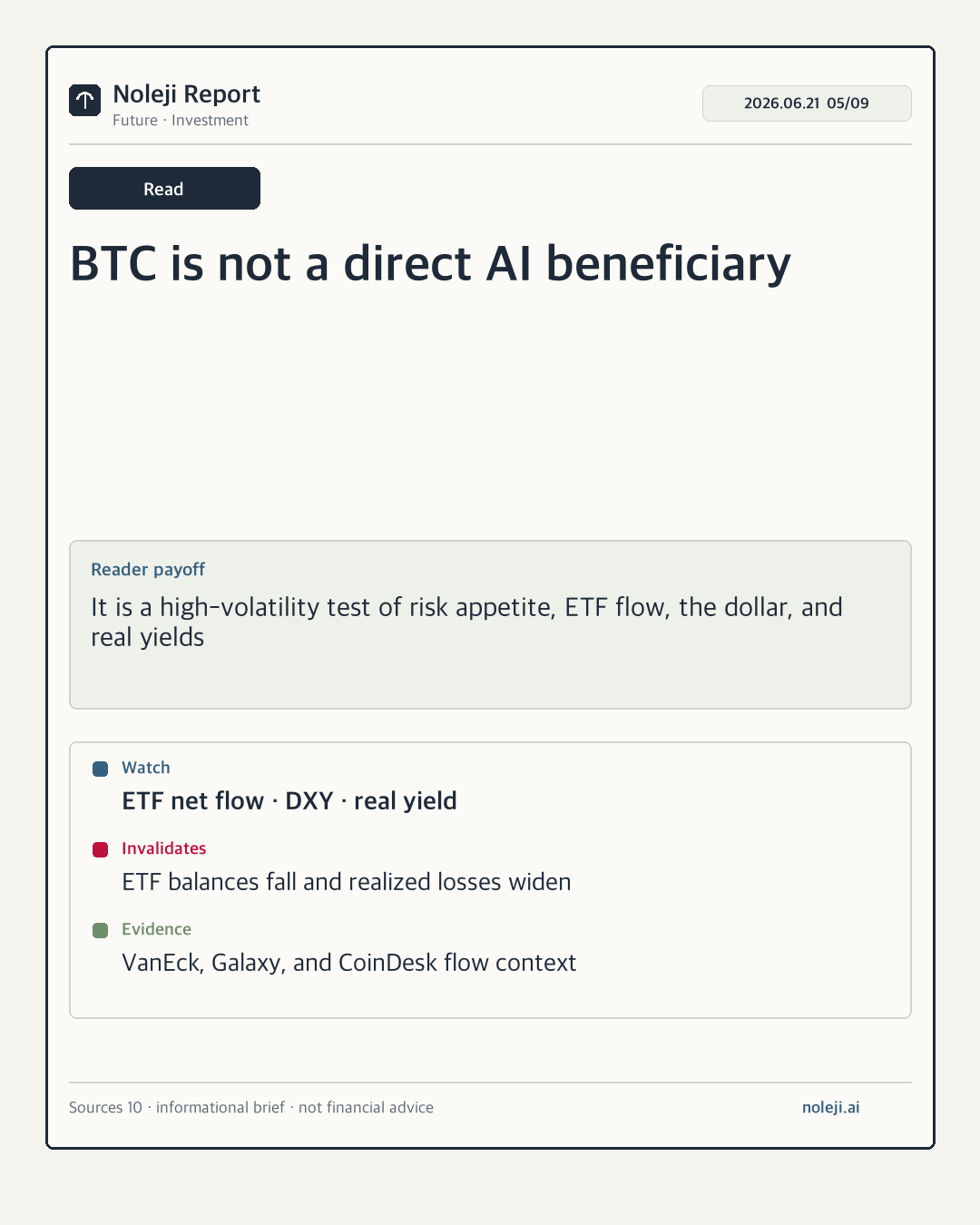
Bitcoin is closer to a risk-appetite test than a direct AI beneficiary
Bitcoin is not a direct beneficiary of AI capex, but it belongs in the same briefing because it is sensitive to risk appetite, the dollar, real yields, and ETF flow. VanEck and Galaxy both frame recent Bitcoin weakness through ETF outflows, on-chain realized losses, miner cash-flow pressure, and regulatory questions. CoinDesk notes that an outflow streak ended, but a small inflow is not enough to prove a trend change.
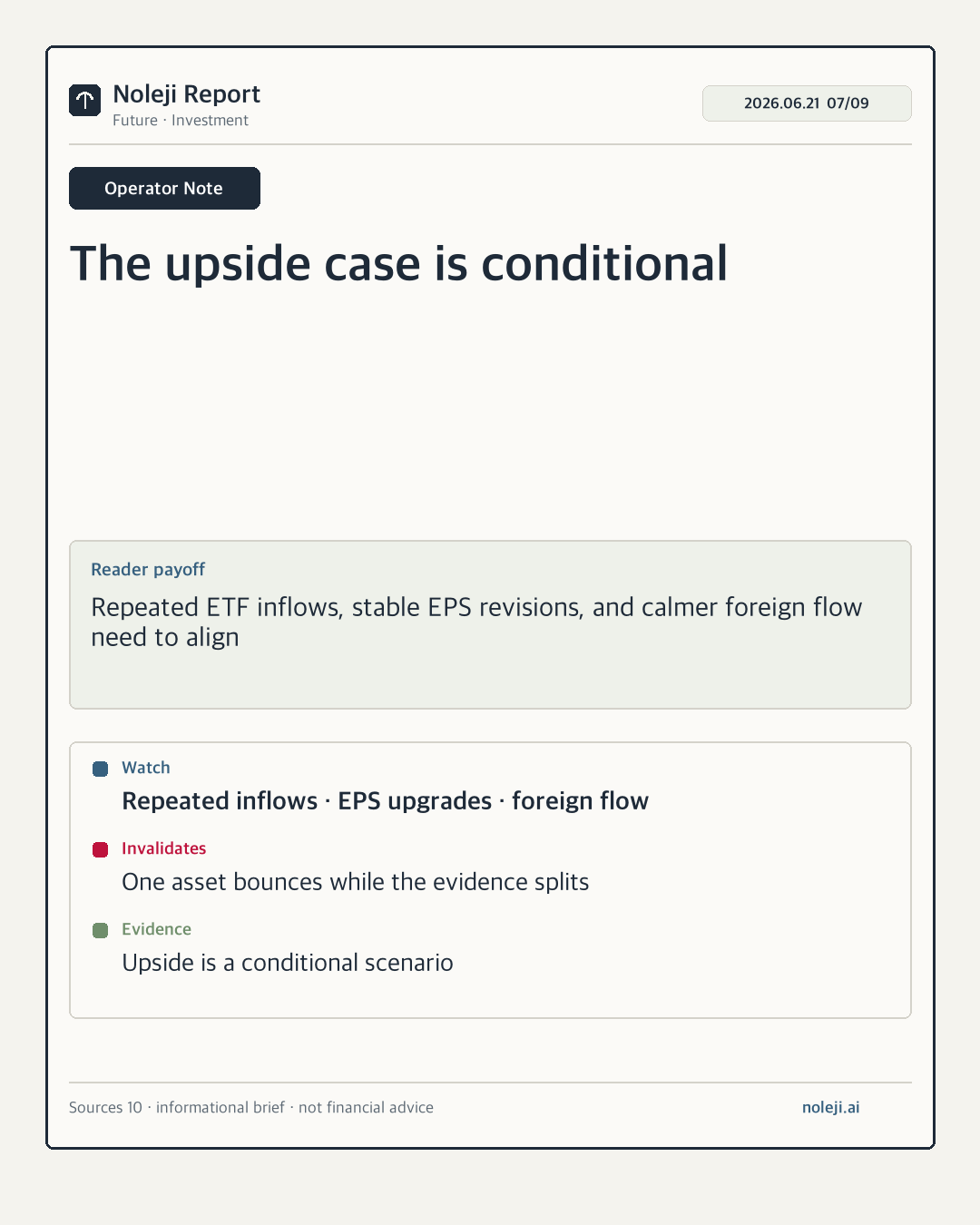
The base case is therefore cautious. Bitcoin's long-term institutionalization story remains, but the near-term setup depends on several sessions of spot ETF inflows, easing dollar and real-yield pressure, and cleaner on-chain profitability signals. A stock rebound does not automatically guarantee a Bitcoin rebound if ETF flow stays weak.
The asset map for today
| Asset | Base case | Bull case | Bear case | What to watch |
|---|---|---|---|---|
| US AI semiconductor chain | Strong earnings, but volatility around expectations | Stable capex guidance, EPS upgrades, margin defense | Capex slowdown, higher rates, valuation pressure | Hyperscaler capex, NVDA margin, 10Y yield |
| KOSPI semiconductors | AI demand is strong, but FX and flow can lead price | EPS revisions and foreign flow improve together | Foreign selling, won volatility, weaker memory pricing | DRAM/HBM prices, USD/KRW, foreign net buying |
| Bitcoin | Institutional story remains, but flow confirmation is needed | Repeated ETF inflows and easing real yields | ETF holdings decline, realized losses widen, regulation worsens | ETF net flow, RPLR, DXY, real yield |
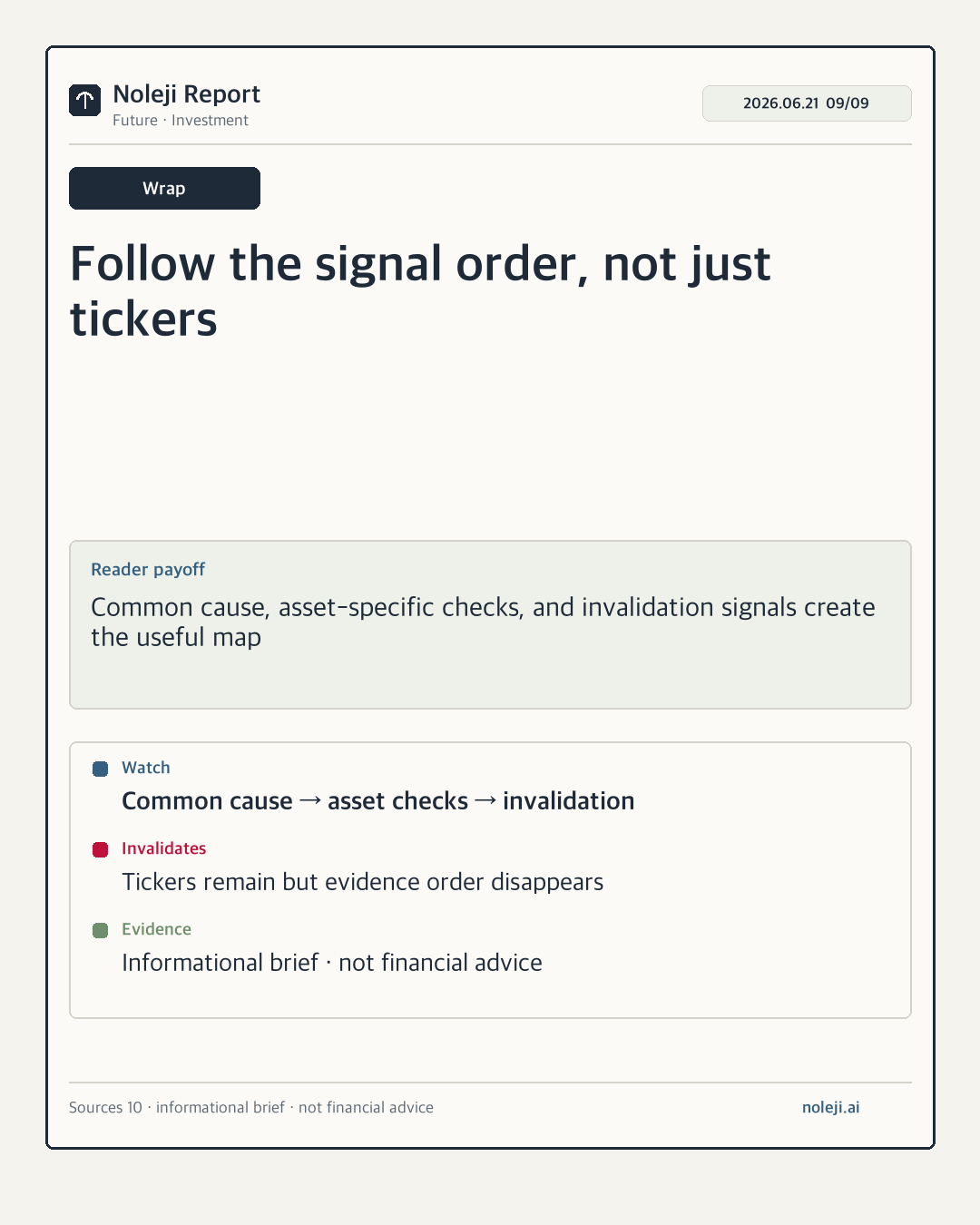
The free brief's conclusion is simple: AI capex is the common cause, but each asset has a different confirmation signal. US AI semiconductors need capex and margins. Korean semiconductors need memory demand and foreign flow. Bitcoin needs ETF flow and on-chain repair. In the same AI and liquidity cycle, each story breaks at a different point.
This content is informational market commentary based on public sources and institutional research. It is not financial advice. Any decision about a specific asset should be reviewed against personal circumstances, risk tolerance, and qualified advice.
Take-aways
- AI capex is the shared cause, but US AI chips, Korean semiconductors, and Bitcoin require different confirmation signals.
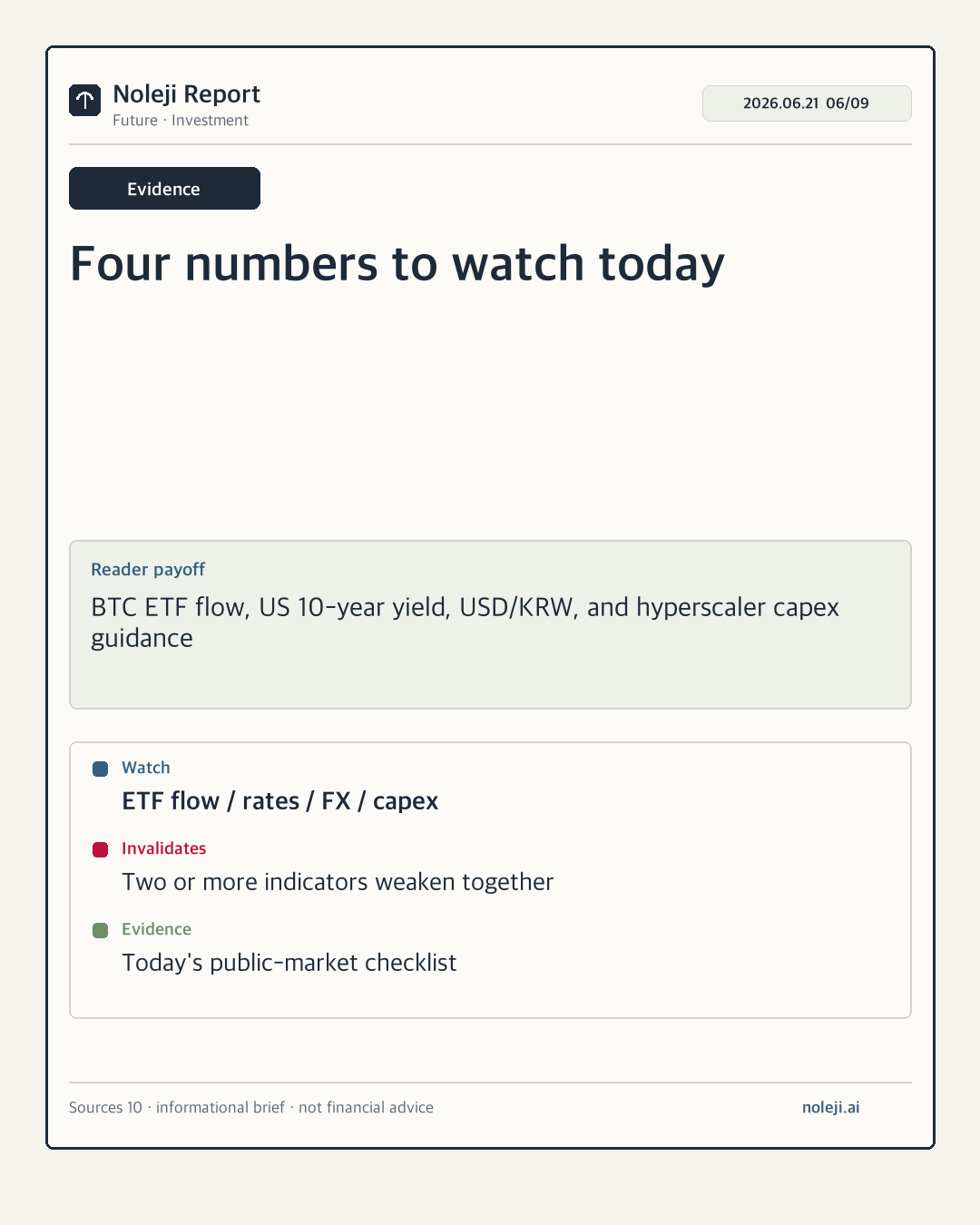
- Watch capex and margins for US chips, HBM demand and foreign flow for Korea, and ETF flow plus real yields for Bitcoin.
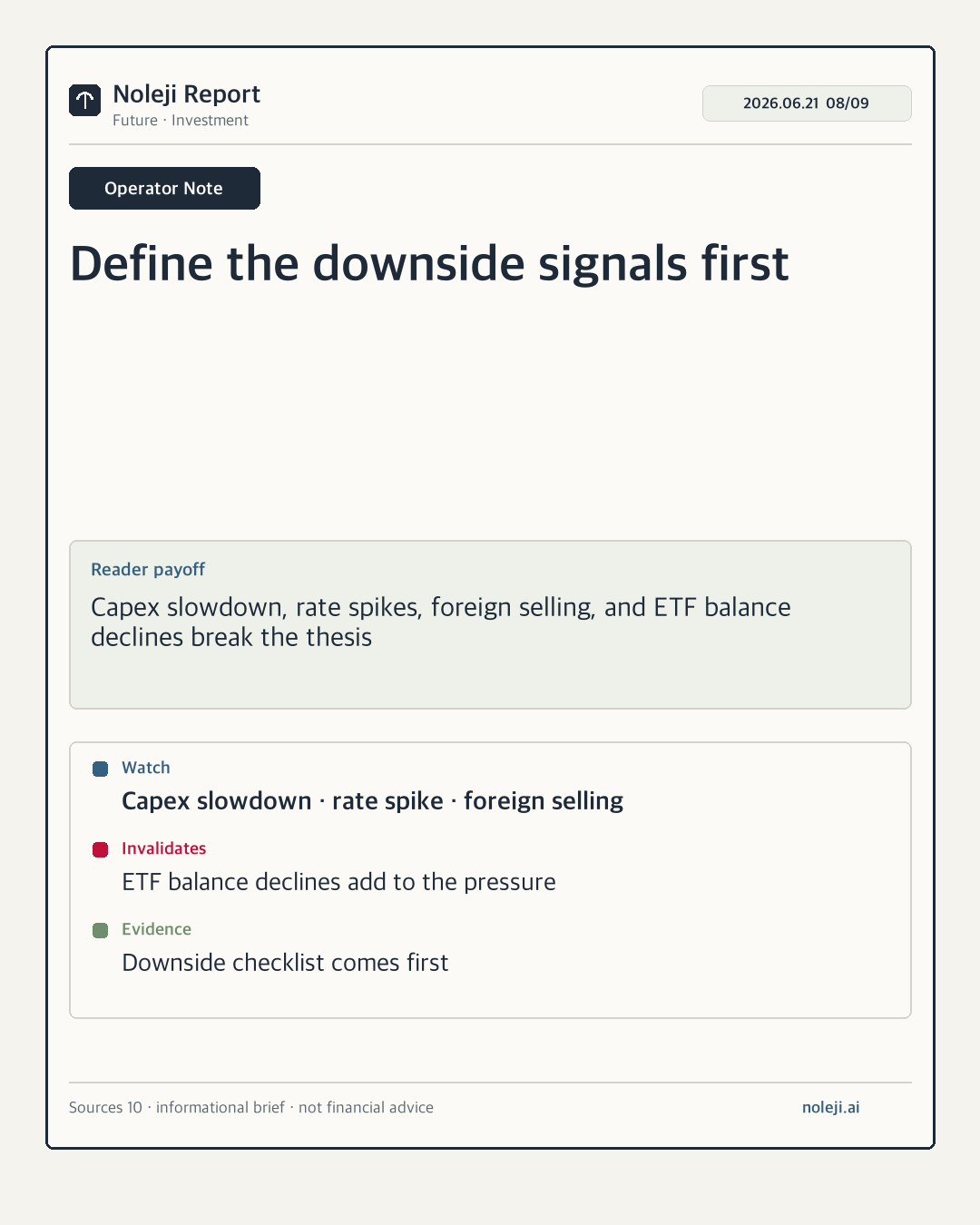
- The conclusion is a scenario map, not a buy or sell instruction. Define the invalidation signal first.
→ 한국어 버전 →