The old idea in the notebook is not dead; it is untested
A folder you have ignored for three years can become useful again in one afternoon.
That is the practical promise behind Autoresearch: not “AI discovers truth by itself,” but “an LLM agent keeps touching `train.py`, rerunning the experiment, and learning from the score.” For people outside software teams, I would translate it this way: it is like asking a very persistent junior colleague to test variations of an old proposal while you define the rules, the budget, and the stopping point.
My thesis is simple: Autoresearch matters most not for brand-new ideas, but for old ideas that were abandoned because testing them was too expensive, too slow, or too boring.
That is debatable. Many people will say the real value of AI research agents is speed at the frontier. I think the more useful workplace lesson is quieter: automation lets us reopen half-good ideas without paying the full emotional and operational cost again.
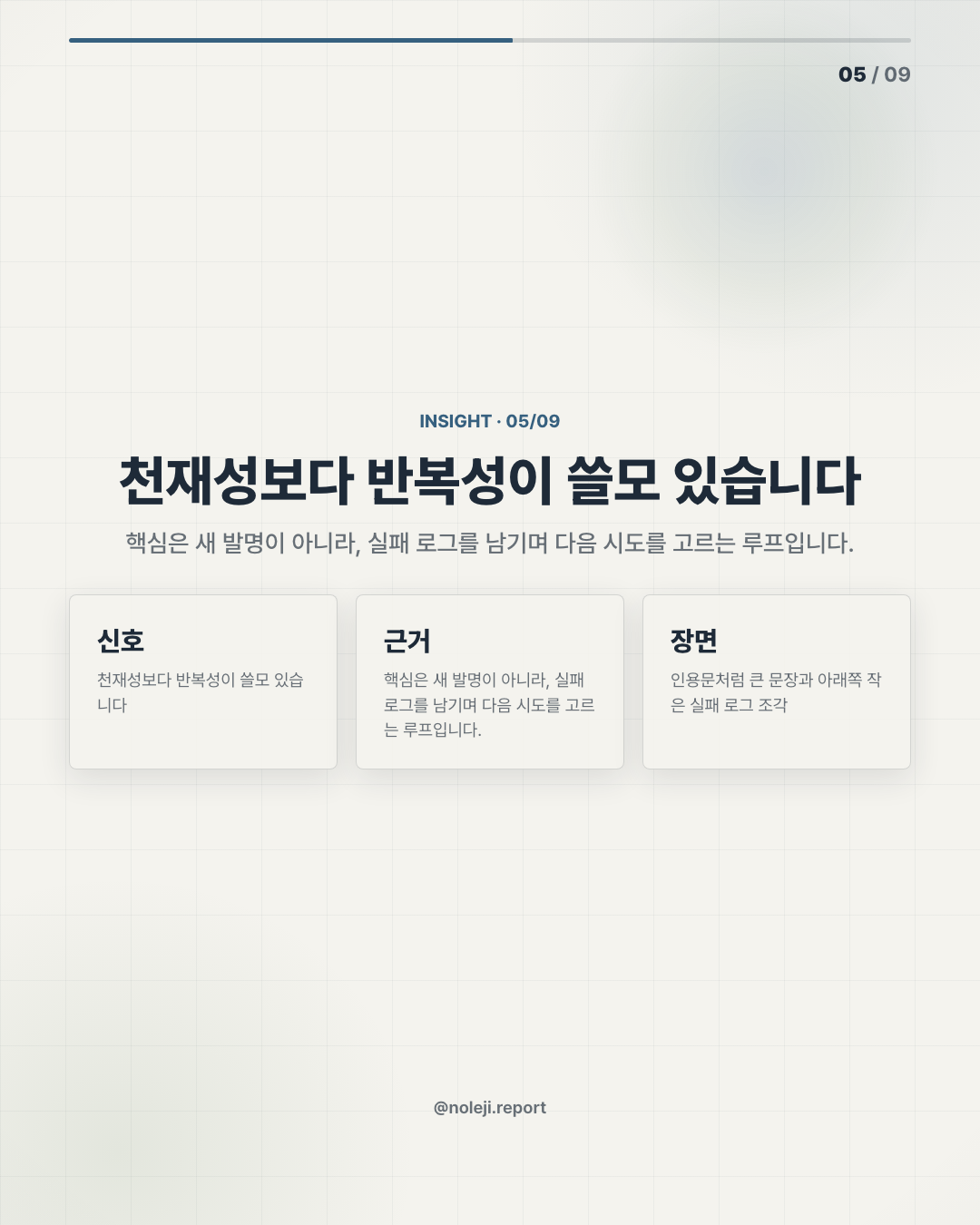
Everyone says “let AI research it,” but the trap is pretending research means thinking
The common mistake is to treat Autoresearch as if the model is doing the intellectual work for us.
It is not. At least, not in the way people imagine.
From the short brief available here, the system is described as a constrained optimization loop: an LLM agent repeatedly modifies `train.py` and tries to improve performance. That detail matters. The agent is not sitting in a chair having a beautiful theory. It is making edits, running tests, reading results, and trying again.
That is closer to office work than most people think.
A non-developer version would be: “Take this stale sales email, change one variable, send it to a small segment, record the response, and repeat under clear limits.” The value comes from the loop. The danger comes when we forget who designed the loop.
I have seen this pattern fail in ordinary work. A team says, “Let’s have AI generate options.” It produces twenty variations. Nobody defined what good means. Nobody decided what evidence counts. By the end, the team has more text, not more judgment.
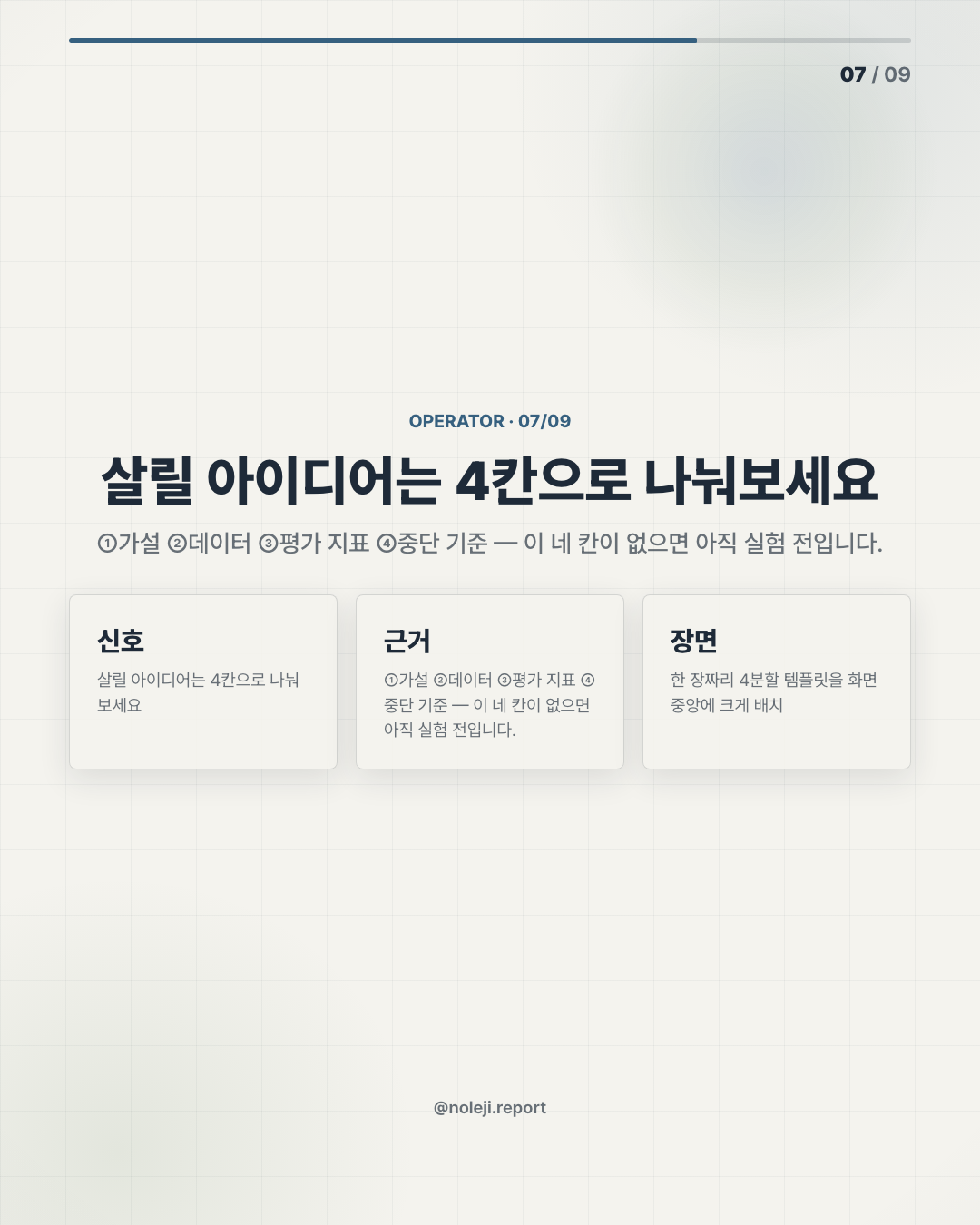
Autoresearch only becomes useful when the human does three things first:
① define the score ② define the boundary ③ define when to stop
Without those three, automation turns an old research idea into a bigger pile of artifacts.
The real unlock is lowering the cost of being wrong
Here is the part I would underline for non-developers: old ideas are often not bad ideas. They are ideas that lost the right to consume attention.
Maybe the first version failed. Maybe the timing was wrong. Maybe the data was thin. Maybe nobody had two free weeks to keep testing tiny changes. In most workplaces, an idea does not die because someone disproves it. It dies because the next meeting arrives.
Autoresearch changes the economics of that problem.
If an LLM agent can make a small code change, run the experiment, inspect the metric, and try another version, then the cost of revisiting an old idea drops. Not to zero. Never zero. But low enough that a question becomes worth asking again: “Was this idea wrong, or was it just under-tested?”
That distinction is useful beyond machine learning.
A marketer has old campaign angles. A teacher has lesson formats that once underperformed. A consultant has proposal structures that almost worked. A product manager has features that users ignored in version one.
In each case, the painful part is not having one new idea. The painful part is running disciplined variations without losing a week.
For a research system, the portable artifact is a scorecard. For office work, I would keep it this plain:
| Question | Weak version | Better version |
|---|---|---|
| What are we testing? | “Can AI improve this?” | “Can variation B improve the target metric by 5%?” |
| What can change? | “Anything” | “Only headline, example order, and CTA” |
| What cannot change? | Unclear | “Audience, offer, and compliance wording stay fixed” |
| What counts as progress? | “Looks better” | “Higher response rate, lower error rate, or faster completion time” |
| When do we stop? | “When we feel done” | “After 10 runs or no gain across 3 runs” |
This is where I take a firm position: the future-ready worker is not the person who asks AI for more ideas. It is the person who turns uncertain work into small repeatable tests.
The brief we have today is thin. There are no external sources attached to this archive item, so I would not present Autoresearch as a proven breakthrough from this material alone. What we can responsibly say is narrower: the described pattern points to a useful operating model. It turns research from a one-shot act into a bounded loop.
And bounded loops are how ordinary workers get time back.
Not because the machine is smarter than us in every dimension. Because it can absorb repetition we should not spend our best attention on.
This fails when the score is lazy or the work is judgment-heavy
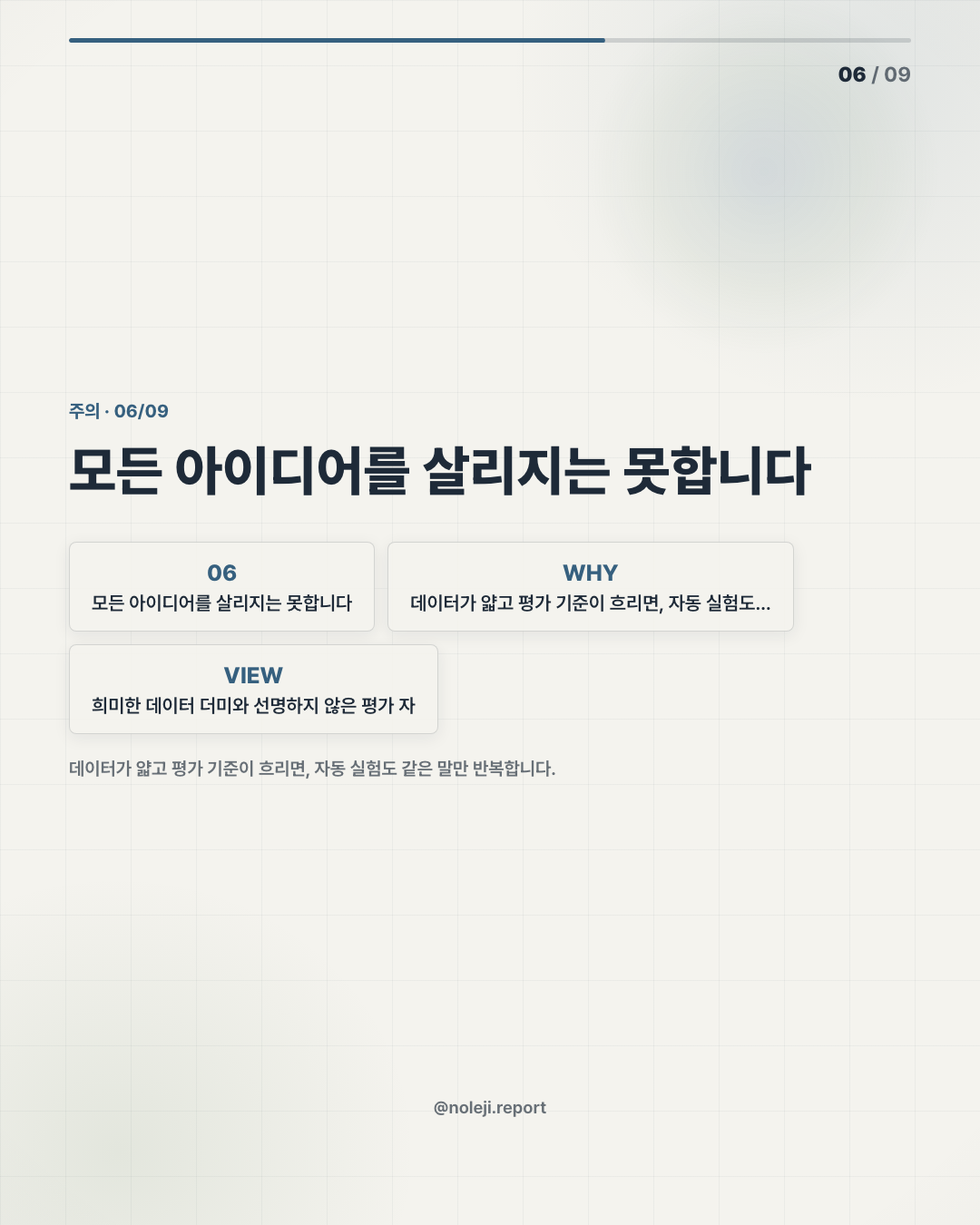
Autoresearch is not a magic machine for old ideas.
If the metric is shallow, the loop will optimize toward shallow success. If the test environment is poorly built, the agent may improve the score while making the real product worse. Anyone who has worked with dashboards knows this problem. Once a number becomes the boss, people learn how to please the number.
The same risk applies here.
A model that keeps editing `train.py` can chase performance in ways that look productive but do not survive outside the benchmark. In a business setting, that is like rewriting a customer email until the open rate rises, while the actual customer trust quietly falls.
There are also domains where the “old idea” needs human context more than rapid iteration. A hiring process, a medical decision, a sensitive customer policy, or a brand apology should not be handed to an optimization loop just because the loop is fast.
My rule is blunt: use Autoresearch-style systems where mistakes are observable, reversible, and bounded. Be much slower where the cost of a wrong iteration lands on people who did not consent to the experiment.
Reopen one stale idea, but put a fence around it first
If I were applying this today, I would not start with a grand AI research project.
I would open one old document, one abandoned experiment, or one “we should revisit this someday” idea. Then I would write a small test brief before asking any tool to generate or optimize.
복붙용 line:
> “We are not asking AI to decide whether this idea is good. We are asking it to run bounded variations so we can judge faster.”
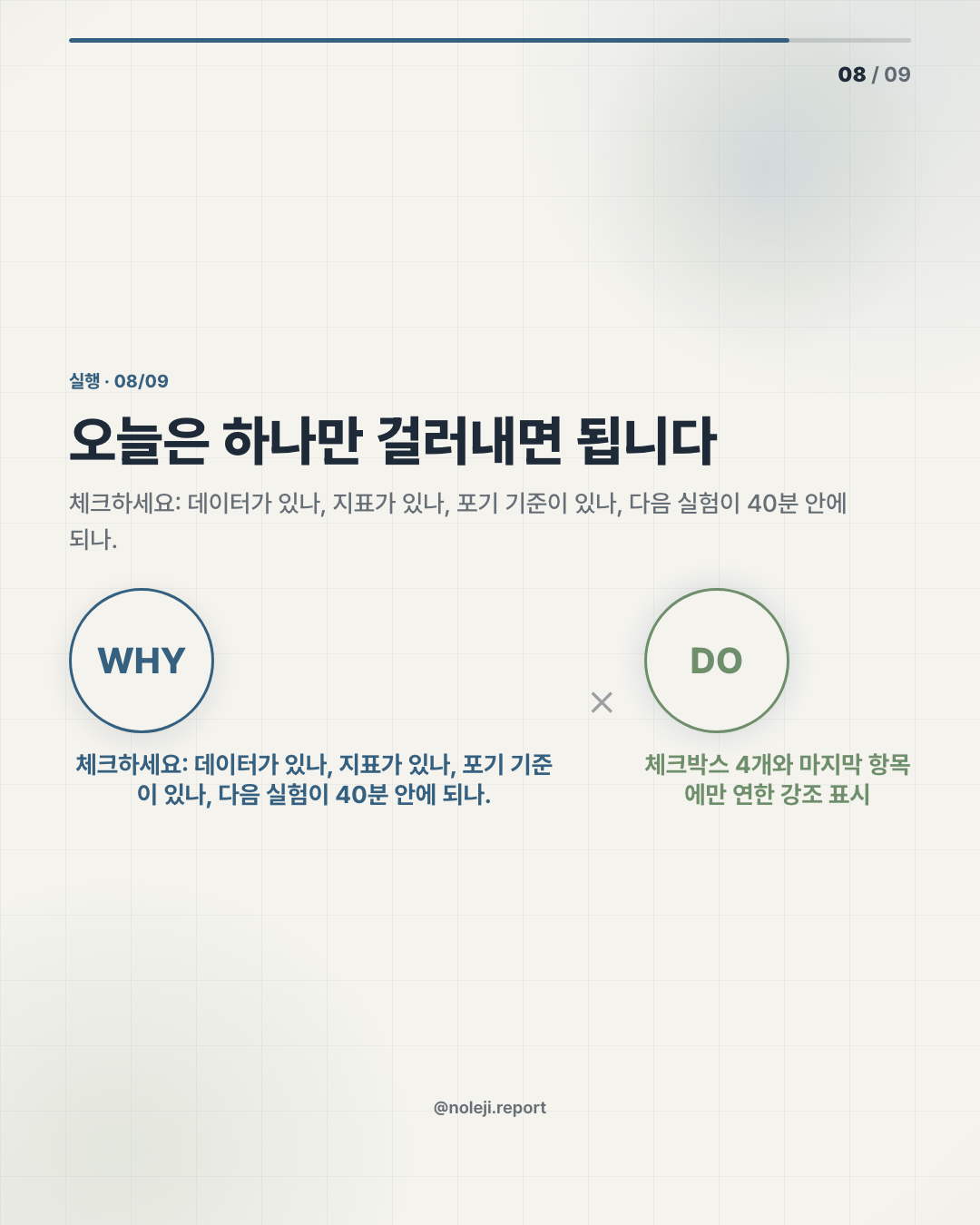
Today’s small system can be this:
① Pick one old idea that still feels useful. ② Write the target outcome in one sentence. ③ Decide three things the AI may change. ④ Decide three things it must not change. ⑤ Set a run limit before starting. ⑥ Review the results yourself before expanding the test.
That is the habit I care about. Not chasing every new AI workflow, but building small machines that protect attention.
The next step is to keep this archive as a working lens: when you see “AI agent research,” do not only ask what the agent can discover. Ask what old, useful question you can now afford to test again.
Next edition: how to design a good stopping rule before an AI workflow wastes the time it was supposed to save.
Take-aways
- A folder you have ignored for three years can become useful again in one afternoon.
- That is the practical promise behind Autoresearch: not “AI discovers truth by itself,” but “an LLM agent keeps touching `train.py`, rerunning the experiment, and learning from the score.” For people outside software teams, I would translate it this way: it is like asking a very persistent junior colleague to test variations of an old proposal while you define the rules, the budget, and the stopping point.
- My thesis is simple: Autoresearch matters most not for brand-new ideas, but for old ideas that were abandoned because testing them was too expensive, too slow, or too boring.
→ 한국어 버전 →